Garden privacy without losing too much light
Plan around real sightlines, targeted screens, viewing angles and seasonal planting before raising every garden boundary.
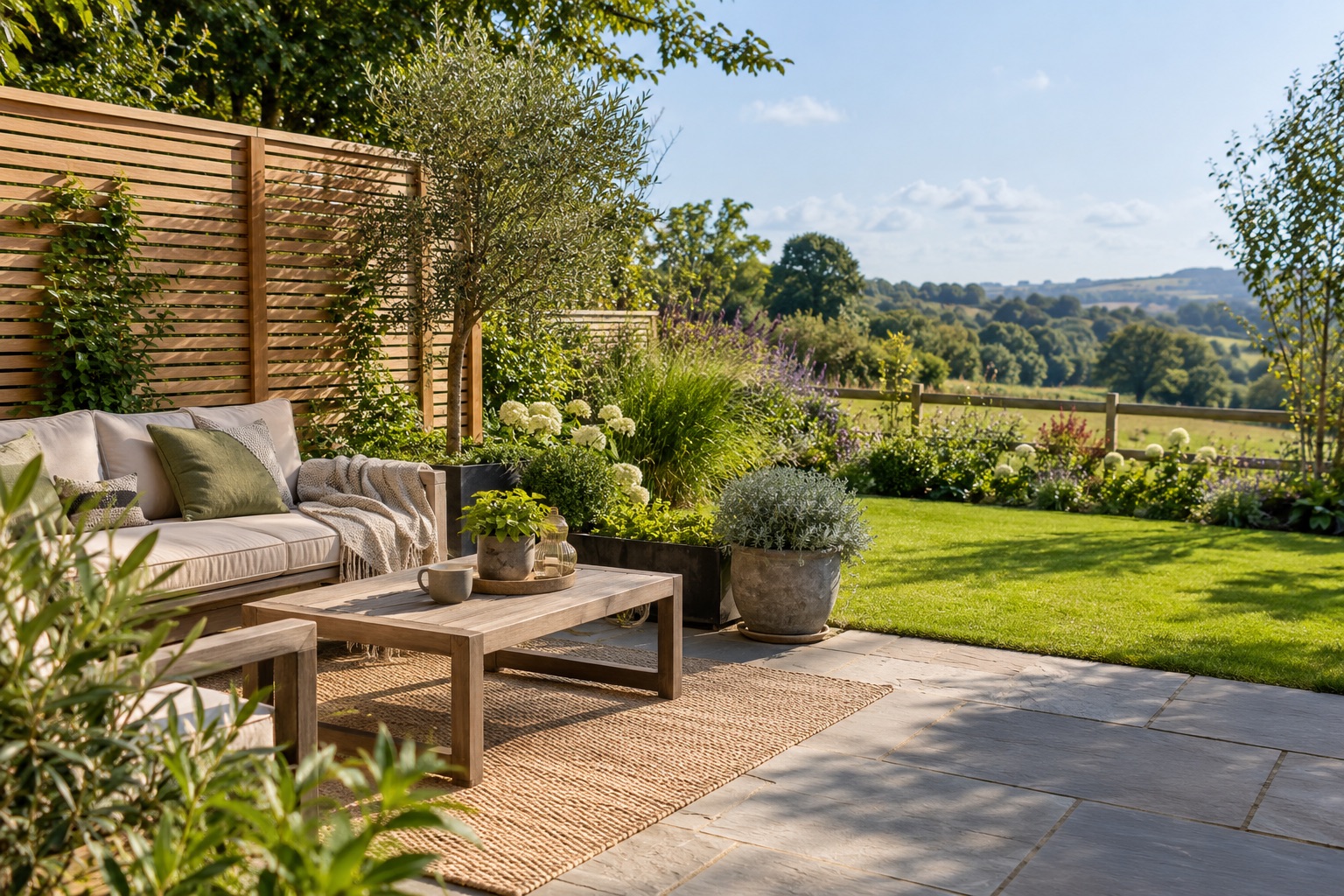
Check the view from the places you use, compare solid and open options at real angles, and consider a limited screen or planting. Privacy, daylight and the feeling of openness need to be assessed together.
Where do you actually want privacy?
Sit at the patio table, stand at the kitchen door and look from the lawn. The uncomfortable view may affect one corner rather than the whole garden. Note whether you want privacy while sitting, standing or moving through the space.
Look at the source of overlooking too. A boundary screen that blocks a ground-level view may do little for an upper-floor window. Do not order a taller fence before considering whether it changes the sightline that matters.
A simple sketch with the viewing positions can communicate more than a request for maximum height. Our height-choice guide helps define the requirement.
Consider a limited screen first
A panel beside seating, an internal divider or a change in the seating position may address the view with less enclosure. Compare those options with replacing a complete boundary.
The RHS screening guide explores permeable screens and viewing angles. Use that design thinking around your own garden rather than treating any one photograph as the answer.
An internal screen still needs suitable supports and relevant permission checks. Moving it away from the boundary does not automatically remove every planning or excavation question.
Open and slatted screens
Gaps can preserve some views and allow light through, but they also allow sightlines. Check the proposed panel head-on, from the side and from the relevant distance. An arrangement that looks opaque from one chair may be quite open from the gate.
Ask for actual gap and board details rather than relying on “privacy slats”. If different heights or orientations are used along a run, check how the appearance changes.
Do not add opaque fabric later without considering the structure and wind load. See wind exposure if the openness forms part of the intended design.
Think about light in different seasons
Visit the area at different times of day and note where sunlight reaches it now. A photograph on one bright afternoon cannot show the full effect of a new solid screen.
Orientation, height, distance and surrounding buildings all matter. Ask a designer for a more detailed assessment if daylight is central to the project. Avoid a promise that a particular colour or slat pattern will preserve all existing light.
A pale finish can change the visual impression of a boundary, but it does not make a solid structure transparent to sunlight. Separate those two benefits when comparing options.
Use planting with realistic expectations
Layered planting can soften a screen and create privacy over time. Check mature size, winter appearance and maintenance needs. A small new plant cannot provide the same screening as the mature example used to sell it.
Deciduous cover may be much thinner in winter. Dense evergreen planting can create another substantial barrier and needs room to grow and be maintained. Our climber guide covers suitable support and future access.
Consider whether a modest permanent screen with lighter planting would give a more dependable result than expecting plants to provide every function.
Consider the other side
Discuss the proposed appearance, position and height with the relevant neighbour or owner. A change that feels small from your patio may look substantial from a lower garden.
Use the neighbour discussion guide. Agreement about a preferred design does not itself decide planning permission, ownership or a right of access.
Make the address-specific checks
Use our Bedford planning guide before fixing the finished height or ordering bespoke screens. Include bases, toppers and different ground levels in the proposal.
For roads and entrances, use the roadside guide too. A privacy aim should not obscure the need to consider visibility and the actual highway relationship.
A useful design brief
- The area and activity needing privacy.
- The unwanted view and viewing positions.
- The light and outward views you want to preserve.
- Whether winter screening is important.
- Space for planting, maintenance and independent supports.
- Permissions, retained fencing and budget priorities.
Compare alternatives against that brief. The best outcome may be a smaller intervention than you first imagined, provided it addresses the real view rather than simply adding height.
For a compact plot, compare the layouts in our small-garden fencing guide, including fence and hedge choices.
Our slatted fencing guide compares single, double and near-solid arrangements around real viewing angles.