Climbing plants on fences: supports, growth and maintenance
Choose a suitable support for the mature climber, check permission and plan pruning, wildlife checks and access for later fence repairs.
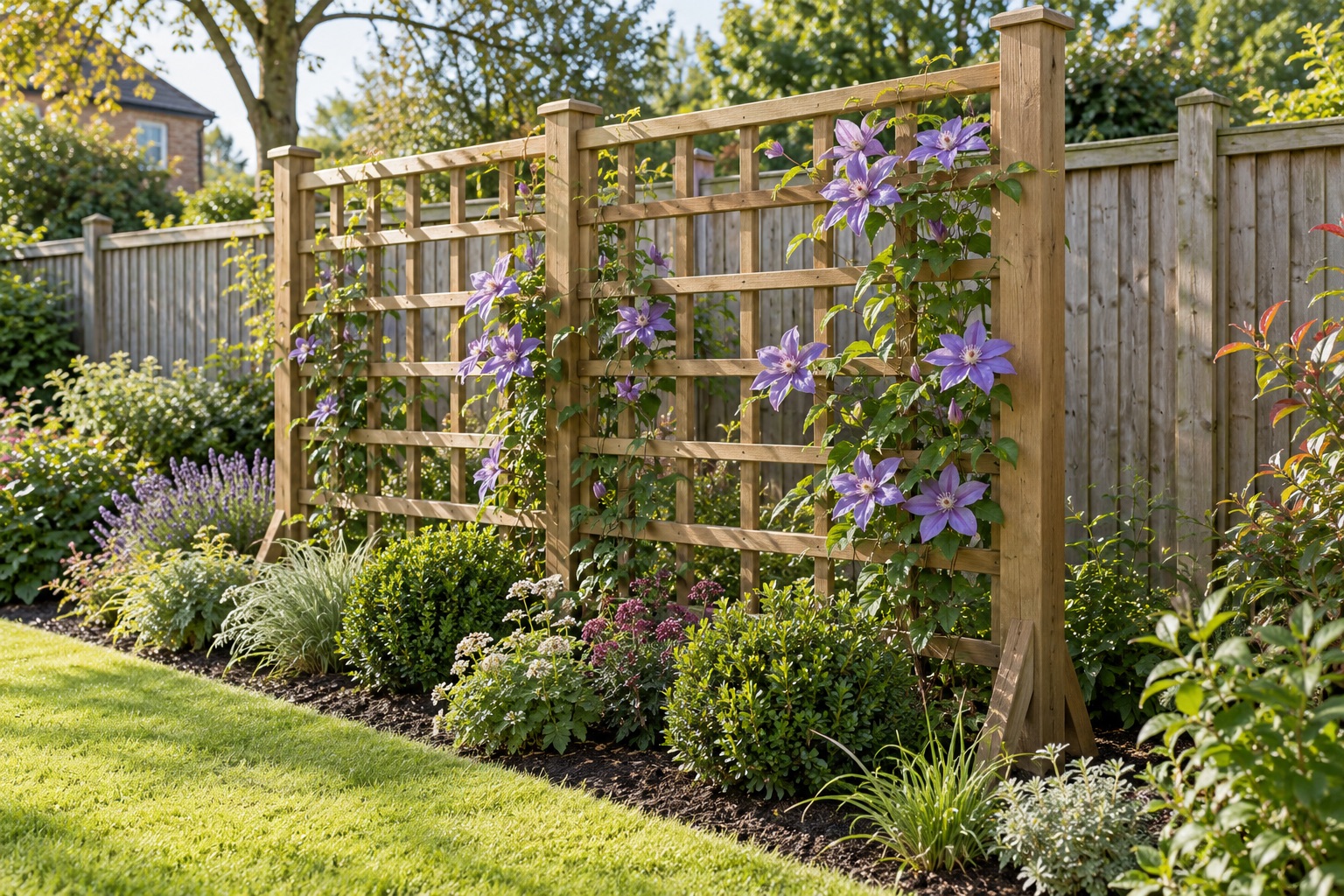
Check permission, the fence's suitability, the climber's growth and pruning needs, and how the boundary will remain accessible for inspection and repairs. Independent supports may be worth considering.
What do you want the planting to achieve?
Flowers beside a seating area, seasonal screening and an evergreen backdrop are different briefs. Decide where the plant is needed and how much boundary it should cover. A whole-fence climber may create more maintenance than a limited screen requires.
Check the plant's mature spread, growth habit, preferred conditions and pruning needs using its actual species or cultivar. “Fast growing” is not the same as manageable in a narrow border.
For dog or family gardens, also check plant suitability for the household. Do not assume every decorative climber is harmless if chewed or handled.
Put the support plan in place before planting
The RHS climber training guide explains different supports and the need to establish them before planting. A twining plant, a scrambling rose and a self-clinging climber do not all attach in the same way.
Ask what supports the plant and how that support connects to the fence or its own posts. Thin decorative lattice should not be assumed to carry any mature climber. Consider wet foliage and the plant's effect in wind alongside its appearance.
Our trellis guide covers the assembly, connections and finished height. The plant's small initial size should not conceal the eventual requirement.
Check whose structure you are using
Obtain permission before fixing supports to a neighbour's fence. Agree the proposed plant, attachments, access and responsibility for pruning or removal. Permission for a lightweight seasonal plant is not necessarily consent to permanent dense growth.
See altering a neighbour's fence. Tenants and leaseholders should also check the relevant owner or manager's conditions.
When independent supports may help
A separate post-and-trellis arrangement can avoid relying on the boundary panel itself. It still needs suitable supports, position and permissions. Do not call it freestanding if it is quietly tied to the old fence.
Leave practical space for plant growth, inspection and maintenance. Ask how the screen can be repaired if a support fails. A very narrow inaccessible gap can become a trap for debris and make both structures harder to maintain.
Excavation for new supports needs the same attention to services and roots as ordinary fencing. A planting project is not an exemption from those checks.
Keep the fence inspectable
Plan how you will see posts and connections as growth develops. If vegetation covers every fitting, a minor fault may become difficult to assess without substantial cutting back.
Ask how a panel could be removed later. Can wires or trellis be detached appropriately, and who would manage the plant? Recording that plan before growth becomes established helps avoid an unnecessary dispute during a repair.
Do not trap dense stems against components that need movement or access. Follow plant-training guidance and use suitable ties rather than improvised wire that can damage growing stems.
Think beyond the summer photograph
A deciduous climber may provide far less screening in winter. An evergreen may keep cover but require a different maintenance commitment. Consider the view from the places where privacy matters throughout the year.
Use privacy and light planning before expecting foliage to solve a year-round sightline. A limited permanent screen plus lighter planting may be more useful than relying entirely on seasonal leaves.
Pruning and wildlife
Before disturbing dense vegetation, check for wildlife and relevant restrictions. Government bird guidance concerns nests being used or built, not merely a fixed calendar window.
If a nest is suspected, pause the affected activity and seek appropriate advice. Do not strip growth away to make a closer inspection easier. A repair programme may need adjusting around those findings.
Give the installer and gardener the same brief
For a Bedford-area project, explain the intended plant, the boundary and what must remain. Ask who specifies the support, who installs it and who manages future growth. That avoids one person choosing a plant while another prices only a decorative fence panel.
A successful planted boundary balances appearance, suitable support and future access. The fence and plant should be designed to work together rather than becoming inseparable by accident.