Trellis and fence toppers: what to consider before adding height
Plan trellis and toppers around their purpose, compatible supports, climbers, maintenance, ownership and the total proposed boundary height.
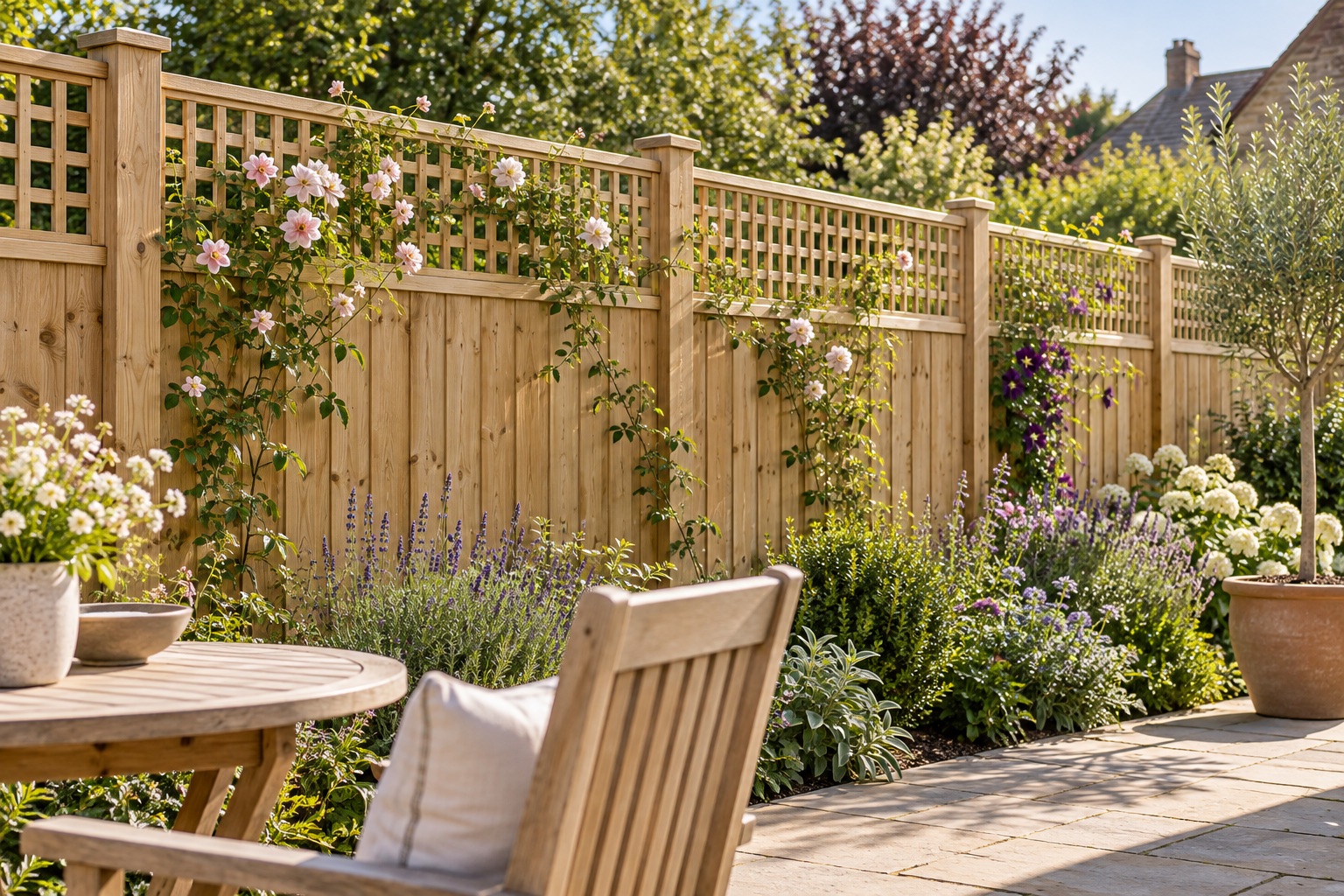
Do not assume a decorative or open addition is exempt from planning considerations, or that an existing fence is strong enough to carry it. Decide what you want the addition to achieve before choosing a pattern.
What do you want the topper to do?
A lattice strip can look attractive above a solid fence, but appearance, privacy and plant support are different aims. An open pattern may soften the top edge without screening a particular view. A close mesh may give a different effect, especially once it supports foliage.
Start with the outcome. Do you want a less abrupt boundary behind planting, a place to train a climber or more privacy while seated? If the aim is privacy, look from the places you use rather than choosing the most decorative product photograph.
The height-choice guide helps you assess sightlines. Sometimes a lower screen in a more useful position is worth considering before raising the whole boundary.
Trellis, slatted toppers and planting supports
| Addition | Potential use | Question to resolve |
|---|---|---|
| Open lattice trellis | A softer top edge or support for suitable climbers | How much view remains through the openings? |
| Closer-pattern screen | A more screened appearance | How will the complete structure be supported? |
| Slatted topper | A linear decorative finish | What can be seen through it from different angles? |
| Separate plant-support frame | Support positioned independently of an existing boundary | Where can it stand, and what foundation and permissions checks apply? |
Those descriptions are not structural ratings. Ask for the exact product, intended use and installation arrangement. Two similarly sized lattice panels may have different frames, fixings and suitable applications.
Can you add trellis to the fence already there?
Have the existing structure assessed first, particularly where posts lean, rails are loose or components show deterioration. A decorative extension should not be used to hide a fault that needs repair. Our repair-versus-replacement guide explains how to describe those concerns.
Ask how the new component will be supported and connected. The answer should identify suitable posts or extensions, compatible fixings and the manufacturer's intended installation. “Screw it to the top” does not explain whether the existing arrangement is suitable.
Discuss the whole finished design, including any climber expected to grow over it. New timber supports and older panels may need different work, and a neat-looking joint in a photograph is not evidence of its performance. If a more substantial frame is required, compare its cost with the alternatives openly.
Measure the complete proposal
Show the panel, base and topper separately on a sketch, then state the intended finished boundary height. Do not describe only the solid section and leave the decorative part out. The ground levels and actual layout still need assessing.
The Planning Portal's guidance sets out national fence-height limits and exceptions. For the local checking process, use our Bedford permissions guide. An open pattern is not a sound reason to skip those checks.
If an existing boundary already exceeds the ordinary limits, do not assume that a further addition is covered because the original fence is established. Describe the precise proposed work and obtain advice on that proposal before ordering.
Will it give the privacy you expect?
View a sample at the intended angle if practical. A pattern that looks quite solid straight on may reveal a view from the side, or the reverse. Consider the nearby seating and windows, not only the view from the end of the garden.
Planting can alter screening, but it does not provide an instant fixed result. Growth, pruning and the seasonal behaviour of the chosen plant matter. Decide whether you are comfortable with the bare structure in winter and during establishment.
The RHS's screening advice discusses balancing privacy, light and views. For this project, use that as a prompt to choose the right location and pattern rather than simply maximise the amount of material above the fence.
Choose the plant and its support together
Know which plant you intend to grow before deciding that a small topper will carry it. Different climbers need different support, training and pruning, and their mature growth can be quite different from a young plant in a pot.
The RHS's guide to training climbers recommends putting appropriate support in place before planting and explains several support arrangements. Its horticultural guidance should be considered alongside the fence manufacturer's requirements, not used as a structural approval for an existing boundary.
Leave access for the maintenance you intend to do. If pruning requires reaching beyond your property, address permission and practical access before planting. Do not add a climber to someone else's fence on the assumption that it is harmless decoration.
Agree the boundary and the appearance
Check who can authorise the alteration. A fence on the edge of your garden is not automatically yours to extend. Use our ownership guide if the documents or past arrangements are unclear.
Where appropriate, discuss the view from the neighbouring garden, how the supports will look and whether installation needs access from the other side. A small drawing can make those conversations much easier. It also helps distinguish a design preference from a disagreement about position or rights.
Keep any practical agreement about the work clear, while obtaining suitable advice if legal ownership or boundary wording needs resolving. Neighbour agreement and planning permission answer different questions.
The Bedford-specific checks
For a Bedford Borough property, start with the council's planning-check guidance. The relevant address, history and restrictions matter more than whether a similar topper is visible elsewhere in the village.
If a conservation-area or listed-building context may apply, consult the council's heritage information and the linked records. Do not assume that an addition described as temporary or decorative is outside every relevant control.
The same care applies to site work. Tell the installer about protected planting, access restrictions and anything that needs to remain undisturbed. A small visible addition can still involve changes to its supporting structure.
What should the quotation explain?
- The exact topper or support product and dimensions.
- The finished height of the whole boundary.
- What existing components remain and what needs upgrading.
- The proposed supports and compatible fixing arrangement.
- Any planting requirement, with separate work clearly identified.
- Access, removal, finishing, VAT and written terms.
Our comparison guide helps record these items. The current cost estimator does not price trellis or structural extensions, so request a specific written proposal rather than adding an arbitrary amount to its result.
Common questions
Is a topper a quick way to make a fence private?
Only if the design actually blocks the view you want to change. Open lattice may soften a boundary without providing much screening. Check the sightline, total height and support rather than rely on its name.
Can planting hide an old fence instead of replacing it?
Planting may change the appearance, but it does not repair unsuitable supports or damaged components. Resolve structural concerns first, then choose plants and supports that suit the sound arrangement.
Should every boundary have the same topper?
No. Different sections can have different purposes. A restrained addition where it helps can be more useful than repeating a detail around the entire garden. Keep the whole design, maintenance and permissions in view.
If the support belongs to someone else, read permission to attach items to a neighbour’s fence before fixing the trellis.
Choose and manage the plant using our climber support guide, including mature growth and access for future repairs.