How to choose a fencing installer
Check the business, relevant work, reviews, credentials, insurance and written proposal before choosing an installer for a Bedford-area fencing project.
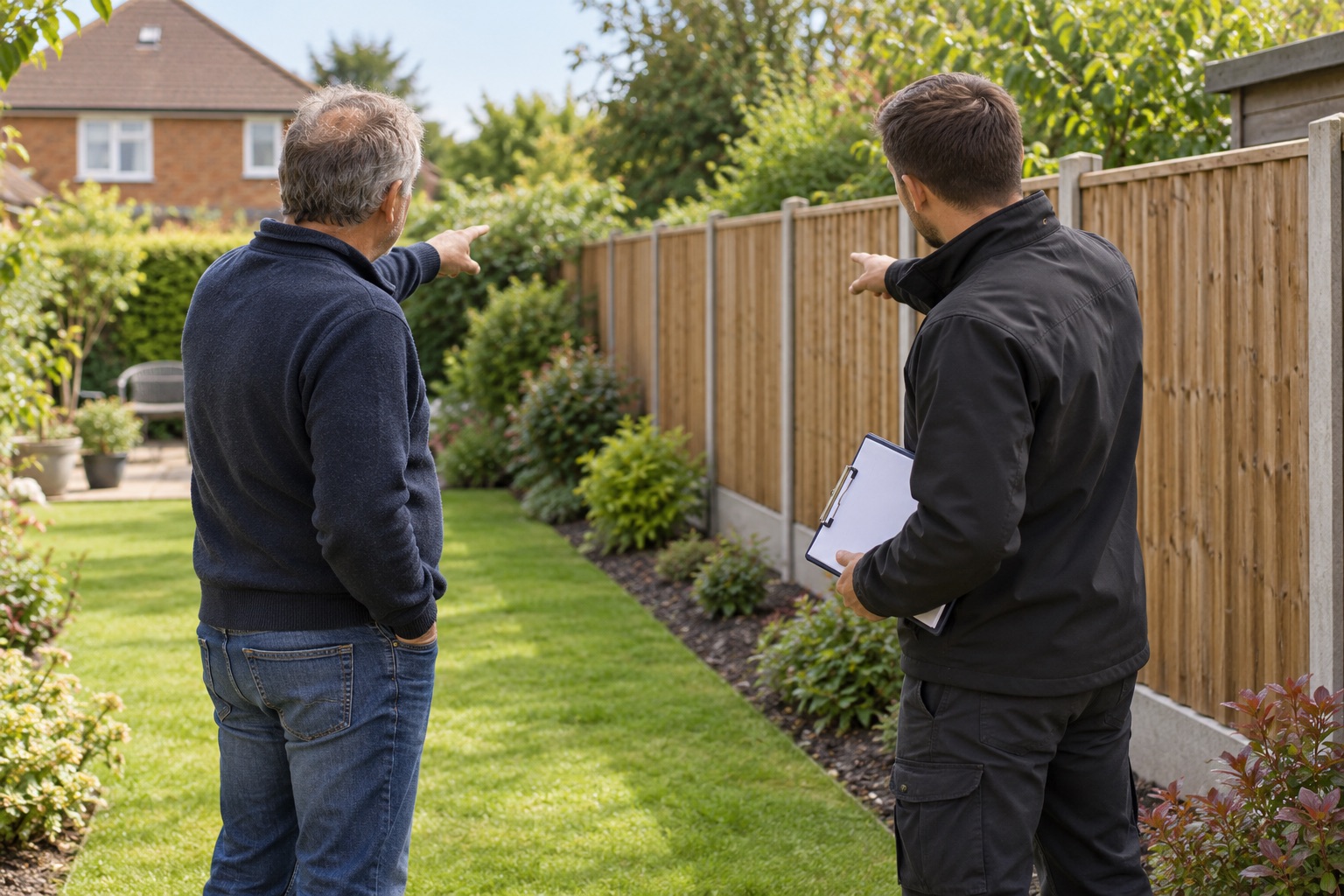
Look for a clear assessment of your garden, an understandable specification and sensible terms. Reviews, photographs and membership claims can help, but none should replace checking who you are engaging and what they have agreed to do.
A useful installer search starts with a useful brief
You will get a better conversation if you can describe the boundary and the outcome you want. Give approximate lengths, the type of problem, access and any known constraints. It is fine to ask for advice about the final design rather than arrive with a guessed materials order.
The measuring guide provides a simple brief. If you are uncertain whether repair is proportionate, say that you want an assessment and an explanation of the alternatives. An installer should not need you to diagnose a buried post before arranging a useful visit.
Keep the same version of the brief for each business. Differences in advice can then be explored as recommendations rather than the result of one installer receiving information the others never saw.
Know which business will be doing the work
Request the business's trading details, a reliable contact route and the name that will appear on the quotation and invoice. If different people handle enquiries and installation, establish who you will speak to during the job and who is responsible for resolving a concern.
For a limited company, the official Companies House service can help check the registered identity. Registration is not an accreditation for fencing workmanship, and not every legitimate installer trades as a limited company.
Make sure payment and contract details relate to the business you intend to engage. If information changes unexpectedly, confirm it through an established contact route before acting on the change.
Ask for relevant examples, not just attractive pictures
A smart front gate and a long sloping boundary are different projects. Ask about work that resembles the challenge in your garden: narrow access, retained posts, changes in level or a particular construction system.
Photographs are useful for understanding the finished appearance, but they do not establish every hidden detail or permission. Ask what the example demonstrates, what the business actually carried out and how the proposed work at your property would differ.
Where references are offered, use them appropriately and with permission. A useful conversation concerns communication, agreed scope, tidiness and how a problem was handled, rather than an attempt to obtain another customer's private paperwork.
Read reviews for evidence you can use
Look for specific descriptions of the work and the customer's experience. A pattern of clear explanations and resolved issues can tell you more than a collection of brief compliments. Check how recent and relevant the examples are to the business you are considering.
Do not treat a rating as a guarantee about your future job. Equally, one negative comment does not tell you the whole history of a dispute. Use reviews to identify questions you want to ask, then compare the answers with the written proposal.
This site does not invent customer reviews or treat its editorial images as completed partner projects. Apply the same distinction when assessing a contractor's claims: promotional presentation and verifiable work history are different forms of evidence.
Check credentials and insurance on their own terms
If membership, approval or certification influences your decision, check what the scheme actually covers and verify the claim with the organisation concerned. A supplier's installer scheme, a trade membership and a qualification are not interchangeable.
Ask about insurance relevant to the proposed work and request appropriate evidence. Citizens Advice's home-improvement guidance includes checks on traders and insurance. If the scope or policy wording raises a question, obtain clarification rather than assuming any document headed insurance covers every circumstance.
For a particular product range, ask how the proposed installation complies with its current instructions. Do not accept an unexplained claim that a product warranty automatically covers every aspect of an installer's work.
Pay attention to the survey conversation
A useful assessment connects the proposal to your garden. Expect questions about the intended height, retained components, gates, access and constraints. If a recommendation changes the scope you requested, ask for the reason.
For excavation, ask how relevant ground conditions and known services will be handled. HSE's underground-services guidance is a reference for the planning and safe working questions involved. A neat panel sample cannot answer those site issues.
Be wary of certainty unsupported by inspection. A business can explain likely options while identifying what remains unknown. That is more useful than a promise that no problem could occur or that one material is perfect for every garden.
Local knowledge should be specific
For a Bedford-area job, ask how the business would handle the actual access, unloading and boundary constraints. A postcode alone is not a soil survey or proof that a product suits the site. Relevant observations should connect to what can be seen or checked.
Keep permissions and ownership responsibilities explicit. The Bedford planning guide and boundary guide help identify issues to resolve before work. Ask who is arranging any necessary checks; do not assume that receiving a quote settles them.
Ask about waste arrangements too. A contractor's job-generated waste requires the appropriate route, as explained in our removal guide. It should not be left as an informal request for you to use a household allowance.
Compare the written recommendation
Obtain a specification and terms you understand, including the price basis, removal, retained components, access and any uncertainties. Use the quotation checklist and the price-differences guide before choosing solely by the total.
Ask about availability without treating a start date as evidence of quality. Both an early opening and a busy diary need context. A credible schedule should explain the process for confirming the work and communicating changes, not pressure you to pay before understanding the terms.
A final conversation before agreeing
- Who is the contracting business and the day-to-day contact?
- What exactly is being supplied, removed and retained?
- Which details remain provisional and how are changes agreed?
- What payment, cancellation and guarantee terms apply?
- What evidence and records should you keep?
The paperwork guide covers that last stage. This independent site may eventually refer enquiries to a named partner, but the same checks apply to that business. An introduction is not a substitute for your own informed choice.
A useful next step is a site-specific survey followed by a scope that explains timing and weather arrangements.
For named products in a quotation, use the steel-system comparison and ask the business to substantiate any installer-status claim.