How long does fence installation take?
Understand lead times, time on site, removal, foundations, weather and completion without relying on a universal one-day installation promise.
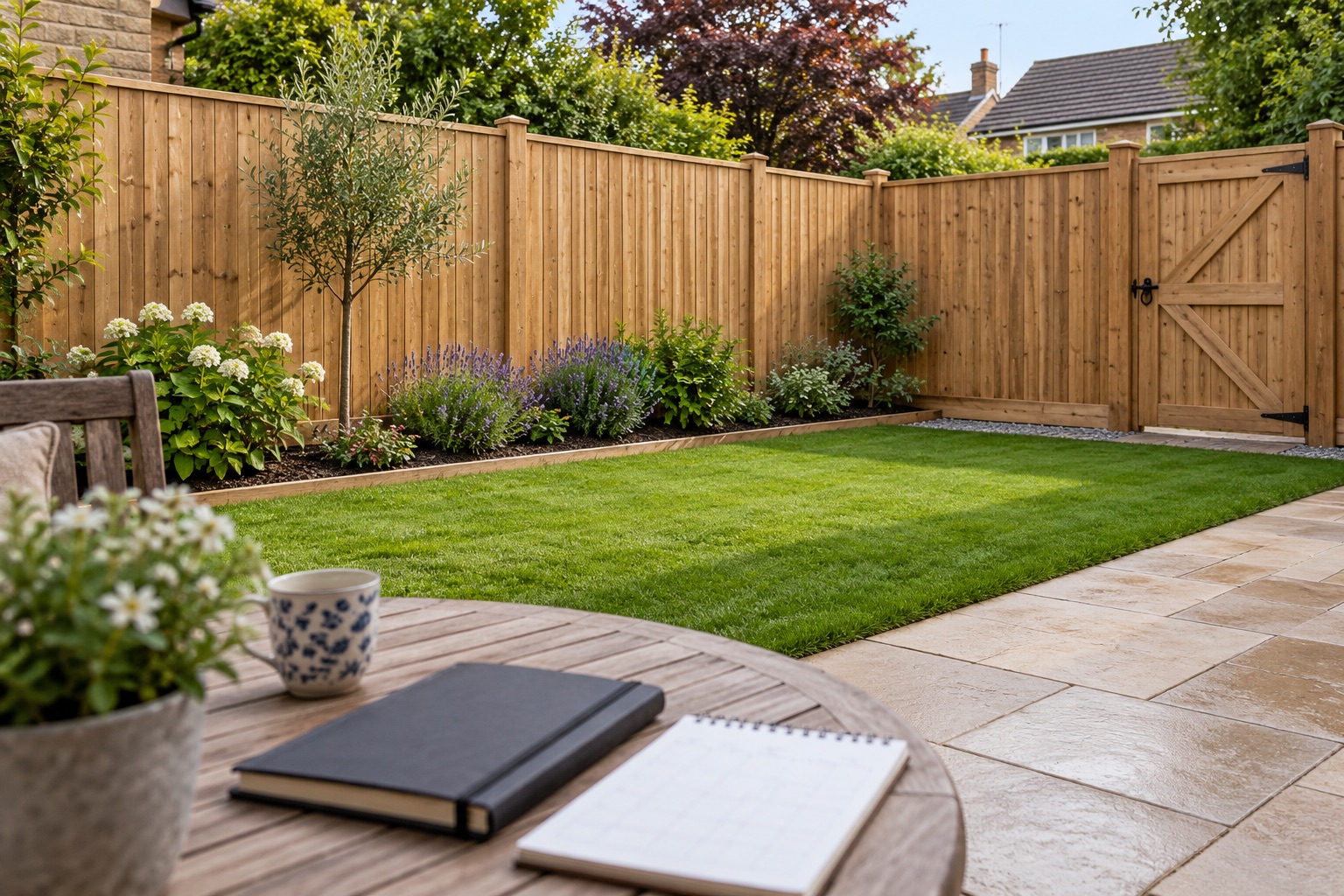
Installation time depends on removal, foundations, access, layout, materials, crew and conditions. Separate the waiting time before work, time on site and any period before the new fence or gate can be used normally.
There are three different times to ask about
When someone asks how long a fence takes, they may mean when an installer can start, how many visits the job needs or when the garden will be fully usable again. A useful proposal answers all three. A short fitting job can still have a materials lead time, while a quick-setting product does not necessarily mean every component is ready for immediate use.
Get a proposed start window and an expected site duration, with the assumptions behind them. Ask which dates are confirmed and which remain provisional. Do not rearrange an important event around a casual estimate given before the garden has been surveyed.
Manufacturer guidance supports that caution: Jacksons' installation FAQs describe timing as dependent on project complexity, season and fence type. That is guidance from one supplier, not a schedule for a Bedford contractor.
Old fence removal can be a substantial part of the job
Taking out loose panels is different from removing buried foundations or working around retained planting. Ask whether posts and concrete are being extracted, cut or retained, and how that fits the proposed new positions. The method affects both duration and the finished result.
Waste also has to leave the garden. A long narrow route, steps or limited loading space can make removal slower than the visible dismantling. Confirm whether waste collection happens during the installation or requires a later visit.
Our removal and disposal guide helps define the scope. A programme that excludes difficult foundations should not be compared directly with one that includes them.
Why length alone is a poor timetable
Two runs of the same length may need very different work. One could be straight, level and easy to reach. Another could include a gate, corners, level changes and junctions with retained fencing. Materials built into place may require a different sequence from complete compatible panels.
Ask how many people and visits the contractor expects, but judge the planned outcome rather than assuming a larger crew always finishes proportionately faster. Access and working space can limit how tasks are organised.
A site survey should identify the obvious constraints and explain uncertainties. Use our survey checklist to make sure the programme reflects the actual route, ground and specification.
A useful sequence to discuss
| Stage | Question to ask |
|---|---|
| Before arrival | Are materials, permissions, access and homeowner preparation confirmed? |
| Removal and setting out | When will the boundary be open, and what could require a revised layout? |
| Supports and foundations | What product instructions and site conditions affect the next stage? |
| Panels, rails and gates | Which connections, reduced bays and adjustments are included? |
| Completion | When are waste, protection and any agreed making-good finished? |
This is a discussion framework, not a required construction sequence for every system. Ask the installer to explain their own method and where pauses or return visits may be necessary.
Setting time is not the whole programme
A product may advertise a rapid initial set. That does not answer every question about loading, bracing, weather protection or gate use. Follow the instructions for the actual material and assembly rather than transferring a time from another brand.
For example, Blue Circle's Postcrete page describes a particular rapid-setting product and its working-temperature limit. It is not a promise that any fence can be completed or used within that initial-set period.
Ask the contractor when you can use a gate, attach agreed items or carry out nearby garden work. Obtain those handover instructions before the crew leaves.
What could change the date?
Material availability, weather, hidden obstructions, unresolved access or an altered design can change the programme. Some can be anticipated; others only become clear during the work. Ask how you will be informed and who must approve a change in cost or scope.
Use our weather guide for questions about rain, wind and cold. A responsible pause should come with an explanation and a plan for the unfinished site, not simply a missing crew and an open garden.
If a delay occurs after dismantling, confirm what will be left safe and secure between visits. Children, pets and neighbouring gardens may require different temporary arrangements from those in the original plan.
Before agreeing a start window
- Check that the accepted quote defines the complete scope.
- Confirm material availability and any bespoke items.
- Resolve permissions, neighbouring access and preparation.
- Ask when each boundary section may be open.
- Agree communication about weather or hidden conditions.
- Include cleanup and any later collection in the expected completion.
For a Bedford-area enquiry, provide the postcode, rough lengths and access photographs rather than asking only for the next available day. The useful answer is a realistic programme for your garden. Treat unusually precise timing before a survey as something to clarify, not proof that an installer is necessarily more efficient.
Include the handover and cleanup checks in your definition of completion, rather than counting only the moment the last panel is fitted.
Before the start date, settle the installation-day arrangements, including attendance, utilities, deliveries and who can approve changes.