Fence rot: warning signs and what to do next
Distinguish timber weathering, surface staining and possible decay, then prepare a condition-led repair enquiry and suitable replacement specification.
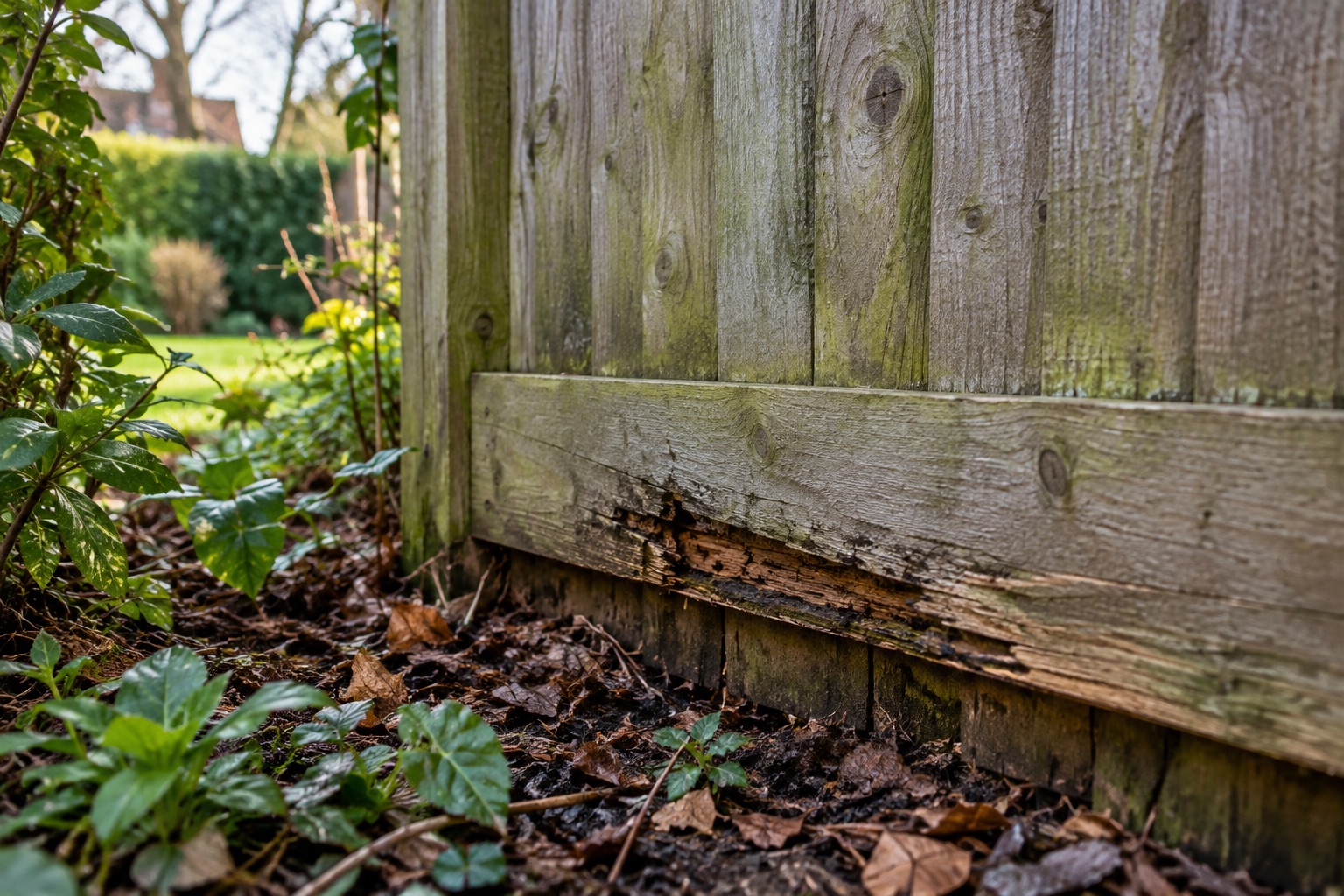
Look for changes in the material and its function, such as crumbling timber, lost connections or movement, and arrange assessment where support is uncertain. Surface weathering, algae and structural decay are different issues.
A grey fence is not automatically a failed fence
Outdoor timber changes appearance. A weathered grey surface can be part of normal ageing rather than evidence that a post or board has lost its usefulness. Conversely, a fresh coating does not prove the underlying timber is sound.
Jacksons' explanation of timber weathering describes colour change for its fencing. Use it to separate appearance from condition, not to dismiss every defect as cosmetic.
Start by noting what changed and where. “The bottom rail has broken away beside the third post” tells an assessor more than “the fence looks old”.
Signs worth reporting
Visible crumbling, missing material, failed connections or timber breaking around fixings deserve attention. Ground-level deterioration in a post can be particularly important because the component supports adjacent bays.
Do not test the fence by stabbing timber with a tool, pushing a post or pulling a panel. Those actions can damage material or destabilise a weak section. Record what is visible from a safe position and leave further investigation to a competent person.
Our post repair guide addresses support faults, while single-panel replacement covers a potentially local bay repair.
Where can problems develop?
Ask the assessor to consider posts near ground level, lower boards, rails and connections where condition may be concealed or moisture may persist. The accessible outer face cannot show every hidden surface.
The Wood Protection Association's post service-life guidance explains ground-line vulnerability and why improvised wrapping is not equivalent to a designed barrier system. Do not wrap an existing damp post in plastic as an assumed cure.
Tell the installer about soil or debris against timber, heavy planting and earlier repairs. These details help explain the setting without proving a single cause from a photograph.
Algae, staining and decay
A green coating, dark stain or weathered finish needs interpretation. A dirty surface may require suitable cleaning, while a deteriorated support requires a different response. Cleaning should not be sold as restoring structural strength.
If the fence is stable and the issue appears superficial, check the product's cleaning instructions before using chemicals or forceful washing. The treatment, coating and timber surface may have different requirements.
If you are uncertain whether the problem is merely a surface change, ask for assessment before coating over it. Retain photographs so the original condition remains available for discussion.
Is the deterioration local or widespread?
One damaged lower board does not automatically mean the entire boundary needs replacing. Several failing supports or connections may make isolated repairs less useful. Ask the installer to identify which parts remain suitable and what the proposed work relies on.
Our repair-versus-replacement guide compares those scopes. A repaired section may reasonably look different from retained weathered material; uniform colour is a separate preference.
Do not accept a precise remaining lifespan based only on a brief visual check. Ask for the known limitations and any further investigation needed before work is agreed.
Specification and installation matter for replacement timber
Request timber suited to its intended use. WPA's Use Class 4 guidance is relevant to ground contact and exterior structural support. “Pressure treated” alone does not describe every component's treatment specification.
Ask how cut ends and ground details follow the supplier's instructions. Read our treatment guide and foundation questions alongside the proposed replacement. A different timber colour or an extra coat is not, by itself, a durability specification.
Keep base components and soil-retaining functions distinct. Where soil is against the fence, see raised-ground and drainage guidance before rebuilding the same arrangement.
If there may be a guarantee
Find the product details, invoice and written terms. Ask the relevant supplier or installer what evidence and assessment are needed. Product guarantees, workmanship promises and consumer rights should not be treated as interchangeable.
Our guarantee guide explains what to keep. Do not assume every treated fence has the same cover or that decay automatically proves a valid claim without checking the terms and circumstances.
Record a change without making the fence worse
Use a photograph of the whole affected bay and another of the visible area, taken from safe access. Add the date, location and whether the issue is new or has changed since an earlier photograph. This gives the installer a comparison rather than a close-up with no context.
Describe observations plainly: “the lower board is crumbling” or “the post moves when the gate is used”. Do not record an assumed diagnosis such as failed treatment unless it has actually been established. Avoid pushing, drilling or cutting a suspect component to demonstrate the fault.
If the fence may be within a guarantee, keep purchase and installation records and ask about the reporting process before altering it. An assessor may need to see the condition and identify the component. Reporting a concern is different from confirming that the guarantee covers it.
What to send with a Bedford-area enquiry
Provide the postcode, affected components, when changes appeared and safe photographs of the wider run. Mention movement, previous work, attachments and ground contact. Leave inaccessible details unverified rather than dismantling the fence yourself.
A useful assessment separates cosmetic ageing, local component damage and wider support problems. That gives you a sound basis for deciding what to clean, repair, retain or replace.
For surface care, use cleaning algae and dirt. For knots, checks and seasonal changes, see natural timber variation before treating appearance as a diagnosis.