Cracks, knots, movement and colour changes in timber fencing
Understand natural timber variation, describe splits and distortion clearly and distinguish appearance concerns from faults that affect function or support.
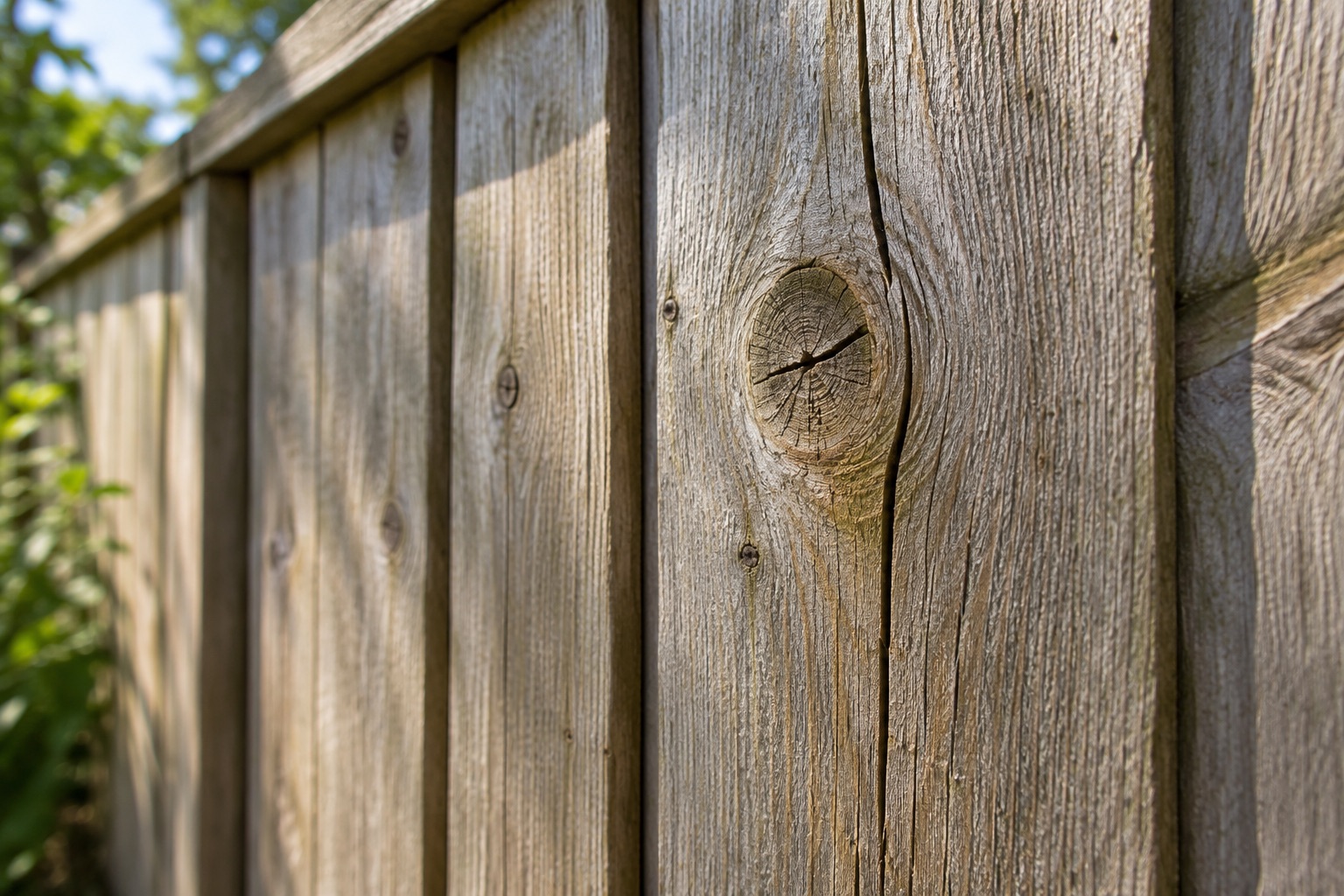
A split or distortion still needs context: its location, extent and effect on connections and function matter. Do not dismiss every crack as harmless or treat every surface change as failure.
Why timber does not stay visually identical
Boards and posts come from different parts of trees, with variation in grain and appearance. Outdoor moisture conditions also change. A newly installed fence is not an inert sheet that will retain exactly the same colour and dimensions indefinitely.
Jacksons' timber FAQs discuss moisture-related swelling and shrinkage, knots, resin and appearance for its products. Those explanations are useful context, but they do not establish that every defect in any fence is acceptable.
The practical question is what the change means for the actual component and assembly. Separate appearance, fit and structural condition when describing the concern.
Knots and grain
A knot marks where a branch grew within the timber. Its presence is not automatically a manufacturing fault. Ask what the product specification and grade allow, particularly for a prominent appearance concern.
If material has fallen out or a connection is affected, explain that specific consequence. A small knot visible in a board and a missing piece around a load-bearing fixing are different situations.
Take a wider photograph and a close view with a useful reference, without loading or dismantling the fence. The supplier needs to see the location as well as the detail.
Surface checks and larger splits
Timber can develop longitudinal checks as it dries. An opening may vary with conditions. That does not mean every split will close or that a post with an extensive crack is automatically fit for service.
Report a change that affects a connection, gate operation or apparent stability. Ask the supplier or installer to assess it against the product and its role. There is no universal crack-width threshold here that decides safety for every timber section.
Do not drive extra fixings across a crack, fill it or cut the component before discussing a possible product issue. An improvised alteration can obscure the original condition and may change the assembly.
Swelling, shrinkage and distortion
Movement can alter clearances, reveal gaps or affect how a gate meets its latch. Describe when you noticed it and whether operation changes with the weather. A seasonal pattern can be useful evidence without proving the cause.
A compatible fence system should accommodate its intended materials. Ask which movement is expected and which requires adjustment or replacement. Avoid assuming a very tight new fitting is always desirable if it prevents the intended movement.
For noise or loose components, see rattles and fittings. For a visible lean or failing support, use the leaning-fence guide instead of treating the issue as ordinary shrinkage.
Colour and resin marks
Weathering, treatment and the wood itself can affect colour. A new replacement panel will often contrast with older bays. Uniform shade is a different requirement from structural suitability.
If resin or an unfamiliar mark is a concern, ask about the material and recommended cleaning method before scraping or applying solvents. A manufacturer's method for its own product is not a universal treatment for every coated surface.
Our finishing guide explains compatibility and preparation if colour is the main concern. Painting should not be used to hide an unresolved condition issue.
How is this different from rot?
Decayed material, failed connections and loss of useful support call for a different assessment from normal surface weathering. A grey post may remain sound, while a freshly coated one may conceal deterioration.
Use rot warning signs if timber is crumbling or material has been lost. Do not test uncertain condition by pushing the fence or probing a loaded support.
Prepare a useful report
- The product, installation date and affected component if known.
- When the change appeared and whether it is progressing.
- Wide and close photographs from safe positions.
- Any effect on gate use, connections or stability.
- Previous coatings, adjustments or attachments.
- The outcome you are asking the supplier to assess.
Keep invoices and product terms with the report. Ask for a clear explanation rather than accepting either “all timber does that” or “every crack means replacement” as a complete answer. For a Bedford-area repair enquiry, provide the condition and practical effect, not merely the age of the fence.