Rattling fences, loose boards and noisy garden gates
Locate the source of fence or gate noise, distinguish a fitting issue from support failure and use compatible repair and maintenance methods.
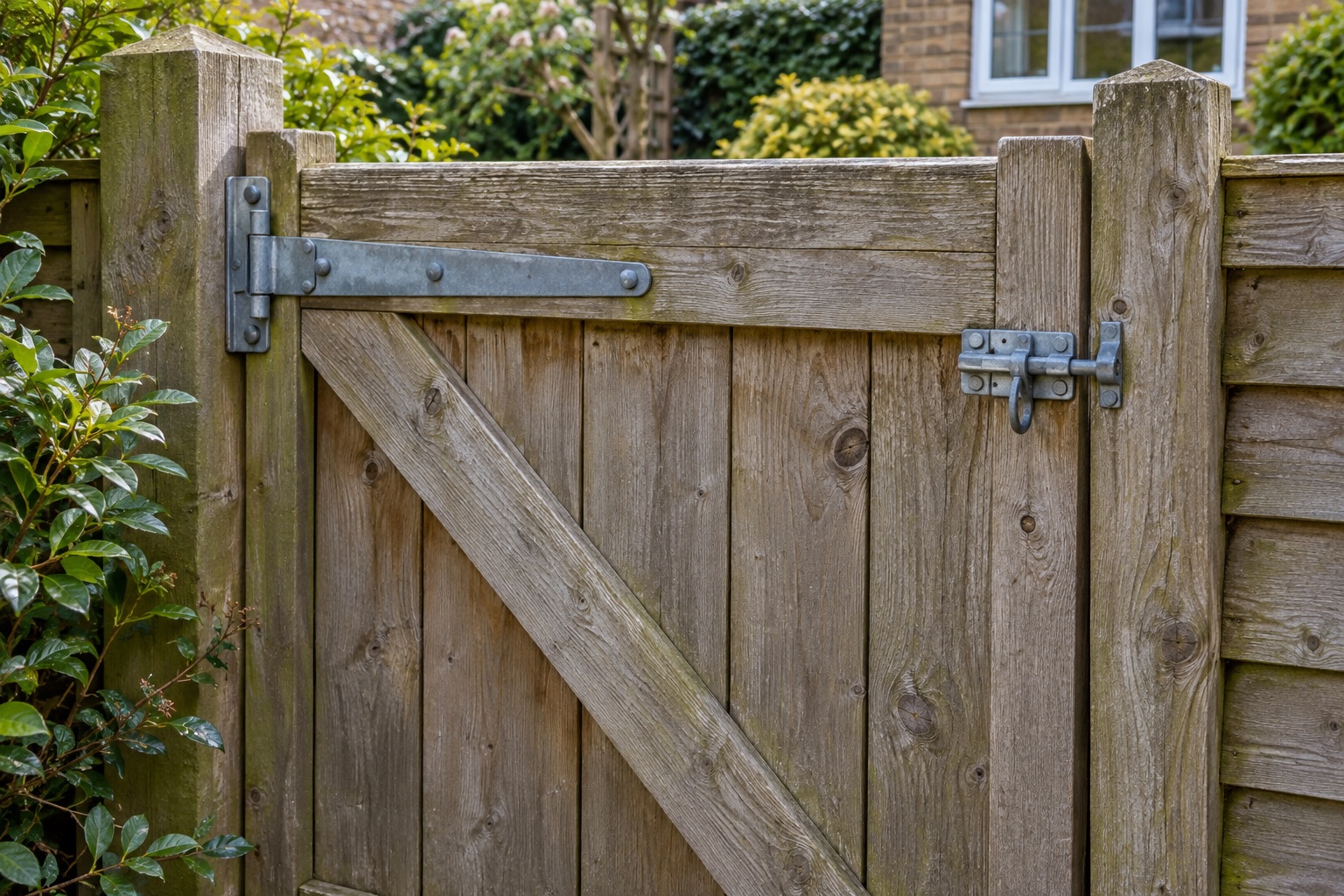
The noise may come from a panel, rail, trellis, latch or gate support. Check whether there is a wider stability problem, then use compatible parts and the selected system's instructions.
Describe when and where the noise occurs
Does it happen in gusts, when the gate closes or only in dry weather? Can you identify the bay or fitting from a safe position? A short recording may help an installer distinguish a metallic latch sound from timber moving in a support.
Do not hold a panel in the wind to isolate the noise. If the fence leans, a post moves visibly or components appear loose enough to fall, treat it as a condition assessment rather than a nuisance sound.
Use our leaning-fence guide where support movement is involved. Quietening a symptom should not conceal a failed structure.
Panels and connections
A panel may move within a support arrangement or have loose connections within its own frame. Ask which movement is intended by the system and which indicates a fault. The correct response depends on the actual posts, panel and fittings.
Do not assume a wedge, foam or extra screw is suitable for every gap. An improvised fix may interfere with drainage, movement, later panel removal or the product's intended assembly. Check compatible components and instructions.
A supplier's direct guide to fence rattles illustrates the range of possible sources. It should inform an inspection, not become a universal instruction to apply the same repair everywhere.
Why the sound can change with the weather
Timber responds to moisture conditions, so clearances and the way parts meet can change. A rattle appearing in dry conditions does not automatically mean the whole panel is defective, but nor does natural movement excuse every loose connection.
Compare the current condition with the product information and original installation. Ask the supplier or installer about expected movement, suitable fixings and any maintenance required. Avoid fastening components so tightly that the intended construction is altered.
Our timber specification guide separates treatment from appearance and maintenance. A coating is not a substitute for a suitable connection.
Gate latches, stops and hinges
A loose latch or bolt can make a metallic noise that seems to come from the adjacent fence. Note whether the gate closes into its intended stop and whether it needs lifting or force to latch. That can point to a wider adjustment or support issue.
Ask for the gate, hinges, latch and support to be considered together. Repositioning the latch alone may not resolve a dragging gate if its post has moved. Heavy gates and damaged fittings can be awkward to handle, so do not remove hinges without a suitable plan.
Lubricants and maintenance products should suit the actual hardware and coating. Follow the manufacturer's instructions rather than spraying every part indiscriminately. For powered gates, use appropriate specialist servicing; this guide is not a powered-gate repair method.
Check trellis and attached items
Trellis, ornaments, lights and planters can move independently or add loads to the fence. Explain what is attached and when it was added. A mature climber may now be quite different from the light plant present at installation.
Our trellis guide covers supports and planting. If the fence belongs to a neighbour, obtain permission before modifying it or removing attachments; see altering a neighbour's fence.
If the fence is newly installed
Report the specific problem to the installer with dates, conditions and a recording or photograph where useful. Ask them to explain whether it is expected movement, an adjustment or incomplete work.
Keep the original specification and handover documents. Citizens Advice's England guidance explains what to do when there is a problem with home-improvement work. Avoid altering the assembly before the installer has a reasonable opportunity to assess it, unless immediate safety requires suitable action.
A useful small-repair brief
- The location and type of sound.
- When it occurs and whether it has changed.
- Any visible lean, movement or damaged connection.
- Gate operation and nearby attachments.
- Product details and earlier work, if known.
- Safe photographs or a short recording.
Ask the repair quotation to identify the cause it addresses, compatible parts and any remaining limitations. A small fitting adjustment may be enough, but the useful outcome is a suitable assembly rather than a quiet fence resting on an unresolved support fault.