Garden fencing for dogs: height, gaps, gates and escape routes
Assess containment around the individual dog, the whole enclosure, digging, gate routines and maintenance without promising a universal dog-proof fence.
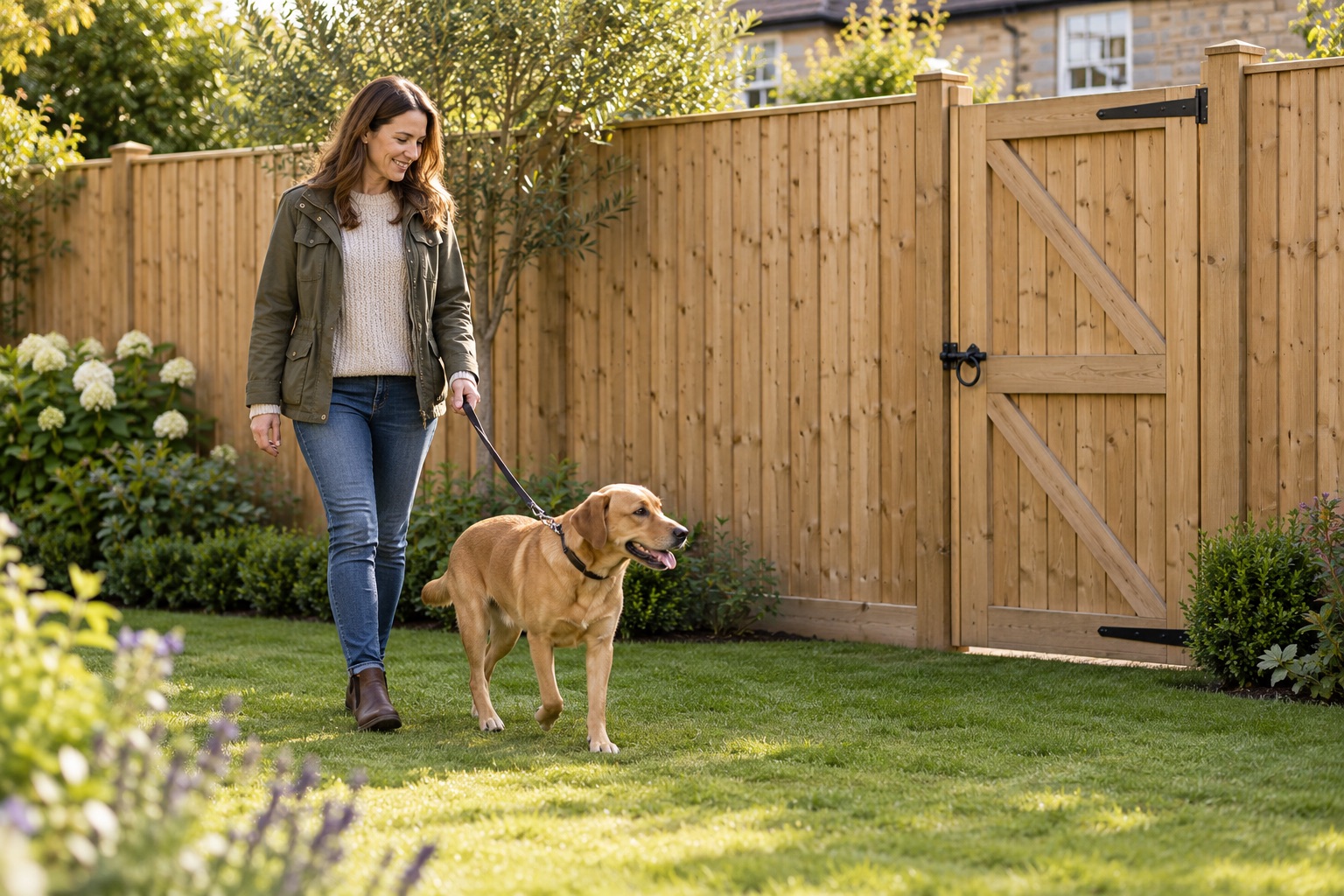
Height is only one factor: bottom gaps, corners, gates, digging and nearby climbing aids also matter. No generic fence height guarantees containment for every dog.
Describe the dog, not just its size
A small dog that squeezes through gaps, a digger and an athletic jumper present different requirements. Explain previous escape behaviour and the places where your dog tests the boundary. Do not rely on breed or body size alone to select a fence.
Blue Cross's dog-friendly garden guidance recommends considering fencing around the individual dog and checking for holes or gaps. That is a useful starting point alongside appropriate behavioural advice where escape attempts persist.
A fence supports management; it does not replace exercise, training or supervision. Avoid testing a new boundary by encouraging the dog to jump or squeeze through it.
Walk the complete enclosure
Check every run, corner and junction with a shed or wall. A tall new rear fence may leave an older side gate as the weakest point. Look for damage and gaps from safe positions before letting the dog rely on the enclosure.
Consider ground levels and nearby objects. Raised beds, stacked materials, garden furniture and other features may change the effective height or provide a route over.
Our height guide helps describe finished heights, but the assessment needs to include the dog's actual starting level and surroundings.
Bottom gaps and digging
Record gaps beneath panels and around gates, including those created by slopes. Ask for a base arrangement suitable for the containment aim and the fence system.
Do not assume a gravel board automatically prevents digging or that improvised buried wire is suitable everywhere. Groundwork needs checks for services, roots and sharp exposed materials. An anti-dig solution should be designed for the actual location and dog.
See sloping layouts and buried-service checks before treating a gap or digging problem as a simple extra component.
Gates and daily routines
A secure gate needs suitable supports, reliable closure and a usable latch. Consider who opens it: visitors, deliveries, children or people carrying bins. A gate that is habitually left ajar defeats an otherwise suitable boundary.
Ask whether an additional managed separation near a frequently used entrance would help. Any second barrier still needs a suitable layout and routine; it is not an automatic escape guarantee.
Report dragging, loose fittings or a gate that needs lifting to latch. Our gate and fitting guide helps describe those faults.
Solid or open fencing?
Think about the individual dog's response to people or animals outside. A more solid view screen may help with one trigger, but it should not be promised to resolve barking or other behaviour on its own.
Ask an appropriate qualified professional where behaviour is the main concern. Choose the physical boundary and management plan together. If solid screening is added to an existing open fence, assess the changed wind load and support needs too.
Inspect after changes and bad weather
Check the boundary regularly, particularly where the dog digs or tests it, and after damage or garden work. A moved bin, raised soil or new hole can change containment without any alteration to the panel height.
Blue Cross advises keeping a dog on a lead in the garden where a gap has been found until it is fixed. Choose a suitable temporary management arrangement rather than expecting a damaged fence to hold.
Use storm first steps if the structure is unstable. Do not approach a failing fence with the dog to assess it.
Care products and planting
Follow coating and cleaning instructions, including when contact is appropriate. Keep products and wet work inaccessible as directed. Dogs Trust's home and garden toxicity guidance is useful when reviewing chemicals and plants.
Do not describe a product as universally pet-safe on the basis that it is water-based or natural. Use the actual label and obtain veterinary advice for exposure concerns.
A Bedford-area containment brief
- The dog's size, behaviour and previous escape routes.
- Every boundary, gate, slope and level change.
- Digging, squeezing and jumping concerns.
- Daily gate use and visitor arrangements.
- Maintenance access and temporary management during work.
- Planning and ownership checks for the proposed changes.
Our planning guide still applies: a containment need does not automatically authorise a taller boundary. Agree what the contractor supplies and how the household will use and maintain it, without relying on an absolute “dog-proof” promise.
Plan wildlife openings alongside the individual dog’s containment needs, and specify the whole gate assembly.