Hedgehog-friendly fencing: planning wildlife openings
Plan a wildlife connection with neighbour agreement, suitable fence details and separate checks for pet containment.
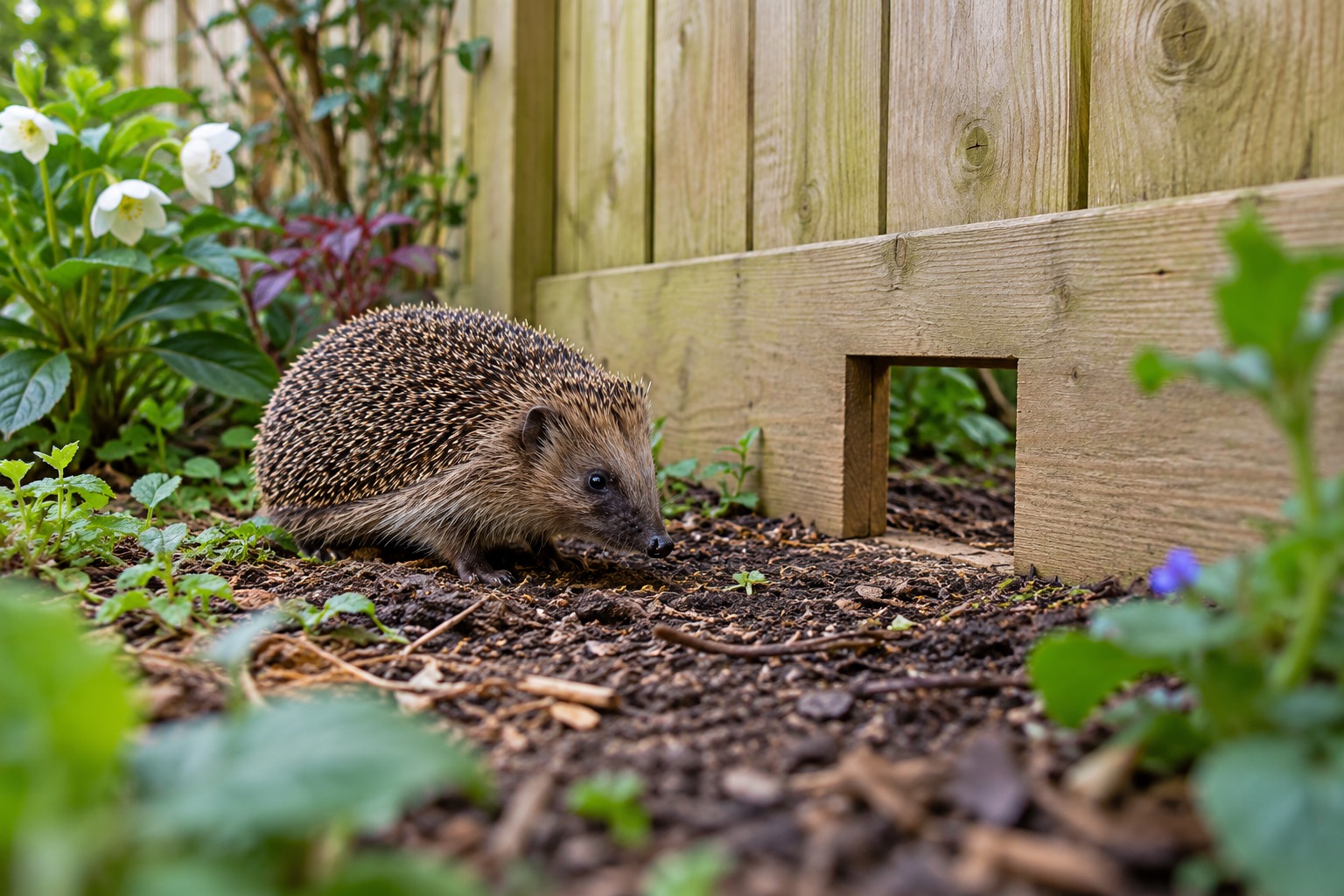
A hedgehog highway can connect neighbouring gardens, but the owner must agree and the opening must suit the fence system and surrounding route. Check pet containment and other hazards separately.
Think about the connection, not just the hole
An enclosed garden can interrupt movement between feeding and sheltering areas. Before ordering a new boundary, discuss whether an existing route should remain or a planned opening could connect useful spaces.
Hedgehog Street recommends a 13 cm by 13 cm opening for a hedgehog highway. That is wildlife guidance, not a structural detail for every panel, a guarantee of visits or a promise that every small pet will remain contained.
Consider what lies beyond the opening. A useful route should not simply lead into an enclosed void, an obvious hazard or somewhere the adjoining owner does not want access.
Agree it with the relevant owner
Discuss ownership, position and the household's needs before modifying the boundary. Explain the intended opening and ask what is on the other side. An occupier may also need a landlord or manager's approval.
The RSPCA's hedgehog-highway activity guidance highlights neighbour permission and pets as points to discuss. Our neighbour conversation guide helps record the wider project arrangements.
Do not cut someone else's fence because the opening is small or beneficial to wildlife. Permission for a new fence should identify any deliberate opening as part of the design.
Choose a suitable component or detail
A purpose-made wildlife base board may be available for the selected system. Ask the supplier about compatibility, dimensions and installation. It can be easier to plan this before delivery than to modify a finished assembly.
If adaptation is proposed, have a competent person check the material and how it is supported. Do not cut structural parts, concrete reinforcement, fixings or an unknown service. An outline on a template is not a universal cutting instruction.
Keep edges and the route appropriate for use, with no loose wire or improvised sharp lining. The base-board guide explains why the base belongs to a complete system.
What about dogs and other pets?
Assess the actual animal and opening. A wildlife charity's description of a gap as too small for most pets is not an assurance for your particular dog, rabbit or other animal.
Our dog containment guide covers the whole enclosure. If the requirements conflict, seek a suitable layout or management approach rather than installing a gap and hoping it is ignored.
Also consider children and any specific hazard beyond the boundary. A wildlife feature should be coordinated with the purpose the fence is meant to serve.
Protect wildlife during the work
Tell the installer about existing routes and sheltered areas before clearance. Avoid assuming dense leaves or vegetation are empty because nothing is visible from the patio.
Use wildlife checks before fencing for the wider planning questions. If an animal or occupied shelter is found, pause the affected activity and obtain appropriate advice. Do not move wildlife simply to keep the programme on schedule.
Make the opening part of the handover
- Record its agreed position and the component used.
- Explain its purpose to household members and the adjoining owner.
- Check that debris, pots or later landscaping do not block it.
- Revisit pet management if the household changes.
- Include the opening in future replacement briefs.
A small feature is easy to lose when someone later adds a board or repairs a bay. Keeping it in the project record helps preserve the intended connection.
Keep the route in the maintenance record
Photograph the agreed opening and note which component contains it. If a panel or base is replaced later, pass that detail to the person ordering the replacement. Otherwise a useful connection can disappear during an unrelated repair.
Check the route from your side during normal garden maintenance. Pots, stored bags and new edging can obstruct a carefully planned opening. If the household gets a new pet or the neighbouring use changes, revisit the arrangement with the relevant owner rather than assuming the original agreement suits every future situation.
For a Bedford-area installation enquiry
Include the proposed route, neighbour agreement and chosen fence system alongside the usual postcode, lengths and access photographs. Do not describe a new garden as a known hedgehog habitat without evidence; simply explain the wildlife feature you would like assessed.
The practical aim is a planned, maintainable opening that works with the boundary and adjoining space. That is more useful than a decorative wildlife label on a fence whose base is closed everywhere.