Fencing work, nesting birds and garden wildlife
Plan vegetation checks and clearance around active nests and other wildlife, without relying on a universal garden nesting-season rule.
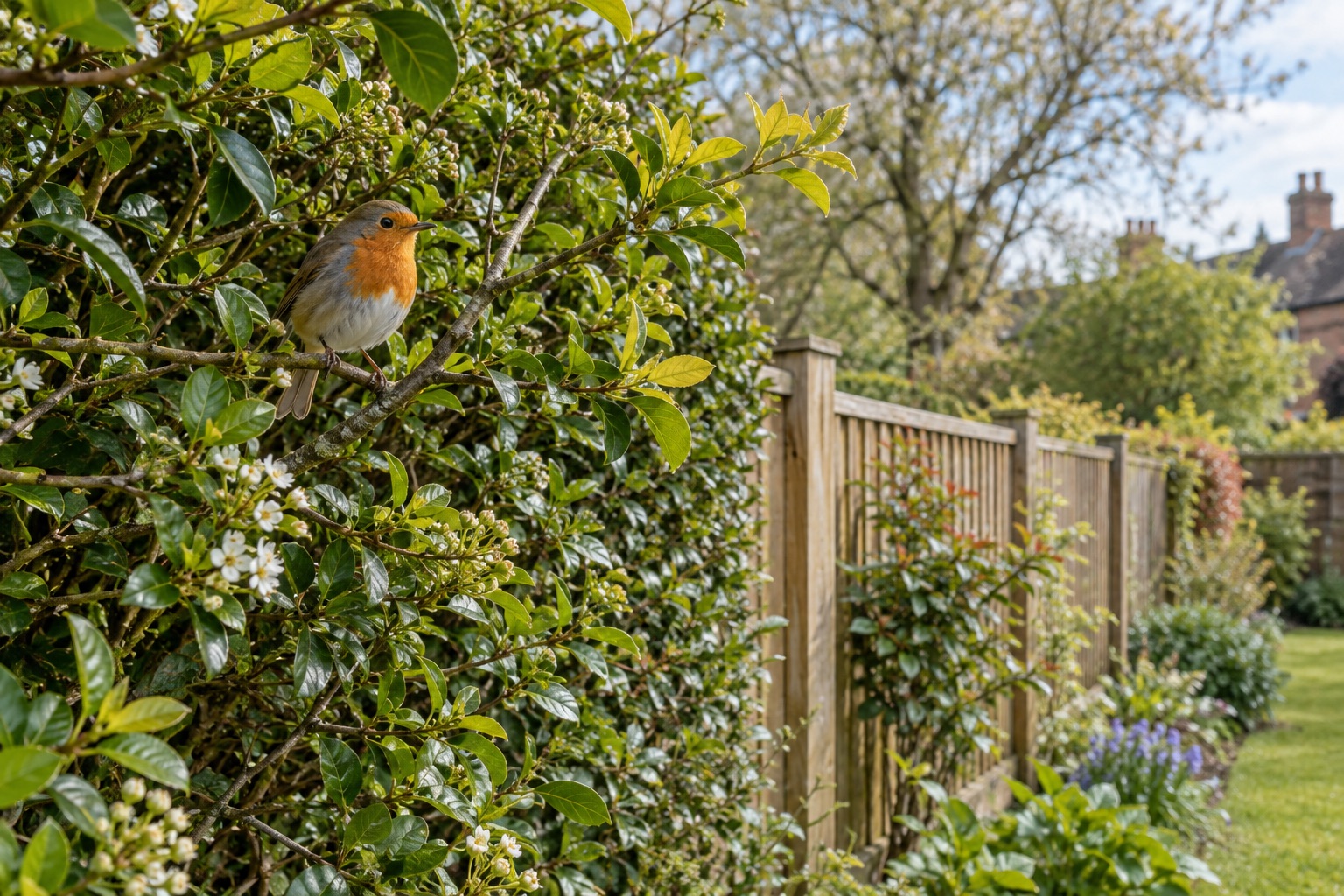
Active bird nests are protected while being used or built, and other wildlife may need separate consideration. Plan the timing and method, and pause affected work where activity is suspected.
Why a fence job can affect wildlife
Hedges, climbers, leaf litter and sheltered corners can conceal more than the old boundary. Work may involve cutting growth, removing supports or disturbing a quiet area even if the quotation is described only as panel replacement.
Show those areas at the survey and identify what must remain. Our preparation guide helps separate homeowner tasks from specialist clearance. Do not strip planting first to make the quote easier.
The bird-nest rule is not just a seasonal date
Government guidance for England explains protection of nests while they are being used or built and additional protections for certain species. A month outside a familiar breeding-season window does not prove an area is clear.
Explain any observed activity, such as repeated movement into the same dense growth, to the contractor. Do not reach into a nest, move it or remove surrounding vegetation to force a closer look.
If activity or a nest is suspected, stop the affected task and seek appropriate ecological advice. A booking, invoice or fence-height permission does not settle wildlife obligations.
What should be checked before the start?
Ask who will consider the affected habitat and whether a suitable specialist check is needed. The answer depends on the work and setting; a general fencing visit is not automatically a protected-species survey.
Be clear about the clearance footprint, storage areas and access route. A hedge may be left standing but still be affected by equipment or removal of the fence supporting a climber beside it.
Record unresolved questions before confirming a programme. A qualified person can advise on the relevant survey and response rather than relying on an internet list of dates.
Hedgehogs and other sheltered animals
Tell the installer about known wildlife routes or occupied areas. Quiet corners and piled vegetation should not be assumed empty. Pause if wildlife is found and obtain appropriate advice about the species and activity.
Consider planned connections in the new boundary. Our hedgehog-highway guide covers owner agreement, component compatibility and pet conflicts. An opening should lead somewhere useful rather than simply satisfy a design label.
Do not advertise that any new fence guarantees wildlife use or that a single hole offsets every habitat impact of clearance.
Hedges and tree controls are separate checks
Work to trees may require permission or notice, including relevant conservation-area circumstances. Use Bedford protected-tree checks where appropriate.
GOV.UK also explains specific rules for hedgerows on or next to agricultural land. Those rules have their own scope and exemptions, including private-garden boundaries. Do not confuse that regime with the separate protection of active bird nests.
At a garden edge beside fields or other countryside, clarify the actual hedge and proposal with the relevant authority or adviser rather than choosing the rule that appears most convenient.
Allow the programme to respond to findings
Discuss what happens if part of the work cannot proceed. Can an unaffected section be surveyed or prepared without disturbance, or should the visit be rescheduled? Obtain appropriate advice rather than deciding that a smaller clearance is automatically acceptable.
Keep children, pets and people away from any partly dismantled area. Wildlife considerations and temporary household containment need coordinated planning.
Our timing guide explains why a realistic programme needs conditions and communication, not an unconditional promise to finish on a particular day.
Make clearance a visible part of the scope
If one business clears vegetation and another installs the fence, agree how findings and restrictions will be handed over. A statement that the garden will be cleared is not a record of what was checked or what may proceed. Keep any unresolved wildlife issue with the programme notes so a later team does not restart affected work without understanding the reason for the pause.
A useful wildlife section in the brief
- Vegetation and sheltered areas affected by the proposed work.
- Known activity or routes, clearly separated from assumptions.
- What must remain and what clearance is actually proposed.
- Who assesses unresolved wildlife or tree questions.
- How a finding changes the work and communication.
- Any agreed wildlife features in the completed boundary.
For a Bedford-area enquiry, photographs can show the habitat setting without claiming to establish that it is unoccupied. The useful result is a plan that treats wildlife checks as part of the job before disturbance begins.