Storm-damaged fence: what to do first
Prioritise safe observation, evidence, owner and insurer contact, temporary arrangements and a defined permanent repair after storm damage.
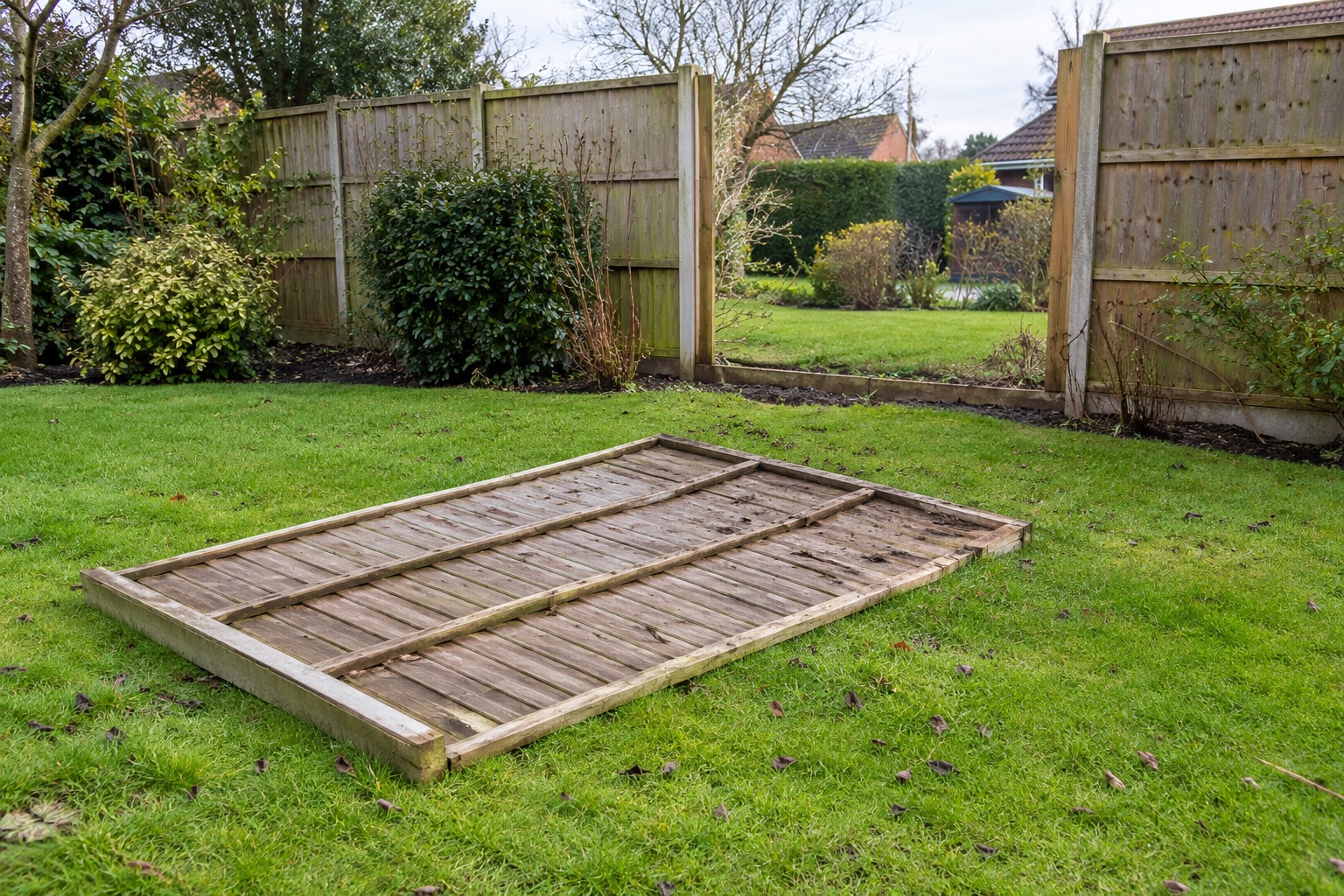
Do not attempt repairs during the storm. Afterwards, record what you can safely see, check the relevant ownership and insurance arrangements, and obtain a defined repair assessment.
While the weather is still dangerous
The Met Office advises against going outside to repair damage during a storm. Keep away from structures that may fail and do not try to hold a panel upright or secure it in gusts.
Keep children and pets indoors or in a suitable separate area. If the boundary opens onto a road or neighbouring garden, avoid relying on the damaged fence for containment. Do not improvise a barrier where installing it would put you in danger.
For immediate danger, obtain appropriate emergency help. An enquiry form is not an emergency response service, and this independent guide cannot make a site safe.
Look from a safe position afterwards
Wait for safe conditions and observe from a distance. Wind may have damaged more than the obvious panel. Nearby trees, walls, posts and overhead services may also be affected.
Do not touch fallen or hanging cables, enter a neighbour's garden without authority or push a leaning section to see whether it will fall. Keep the affected area out of use while arranging suitable assessment.
For a fence presenting a danger to the public in Bedford Borough, the council's dangerous-structures page explains its reporting role. Use the authority relevant to the address; our approximate service radius does not define that boundary.
Record the damage without creating more risk
Take a wide photograph showing the affected run and accessible closer views. Note when you noticed the damage, what weather you experienced and any earlier visible faults. If you were away, say so rather than inventing a precise failure time.
Keep earlier photographs, invoices and product details if available. Distinguish the observations from a diagnosis. “The post snapped during the windy night” is different from asserting that every component was sound beforehand.
A short record helps the owner, installer and any insurer understand the situation. It need not contain private neighbour information or unrelated household details.
Contact the insurer if a claim may be relevant
Do not assume a home policy's storm cover includes the fence. Read the relevant wording and ask about exclusions, evidence and any proposed emergency work. Our fence insurance guide explains the questions.
The ABI storm guidance recommends contacting the insurer and keeping receipts for necessary temporary repairs. Ask what evidence should be preserved before disposal or permanent replacement, without delaying action needed to avoid immediate danger.
Keep emergency mitigation separate from an optional upgrade. A decision to fit a different height or style may need its own agreement, price and permissions.
Tell the relevant owner or manager
Where the fence belongs to another person, or responsibility is uncertain, communicate the damage before commissioning substantial work. Tenants should report to the landlord or agent. Shared access or a managed boundary may involve other parties too.
Our ownership guide helps gather information, while rented and leasehold guidance explains the authority questions. The fact that debris fell into your garden does not automatically decide ownership or the whole repair bill.
Define any temporary work
Ask a competent person what is needed to manage the immediate condition. Agree the work, cost and what it will leave behind. A temporary measure should not be presented as a completed permanent repair unless it has been assessed and specified as such.
Clarify the next visit and any restrictions on garden use. If material is removed, retain agreed evidence and receipts. Do not store damaged panels where protruding fixings or instability create another hazard.
Then assess the permanent repair
A storm can reveal a local failure or a wider weakness. Ask what failed, which parts remain suitable and how the proposed work addresses the cause. Replacing every boundary is not automatic, but neither is fitting a new panel to a failed support a complete solution.
Use repair versus replacement to compare defined options. If exposure is relevant, discuss the complete fence, post and foundation specification rather than relying on a “storm-proof” label.
What to include in a Bedford repair enquiry
- Postcode and the affected boundary section.
- Safe photographs and a description of current instability.
- When damage was noticed and earlier faults or repairs.
- Access constraints and any need to keep the garden enclosed.
- Whether insurer instructions or owner consent remain outstanding.
- Whether you need temporary assessment, permanent repair or both.
Ask for a written scope and explain any urgency honestly. Avoid a rushed decision based on a claim that a contractor is your only chance to get work done. A clear assessment and price are still valuable after bad weather.