Choosing garden fencing with sustainability in mind
Assess retention, repairability, material sourcing, treatment suitability and disposal without relying on unsupported green claims.
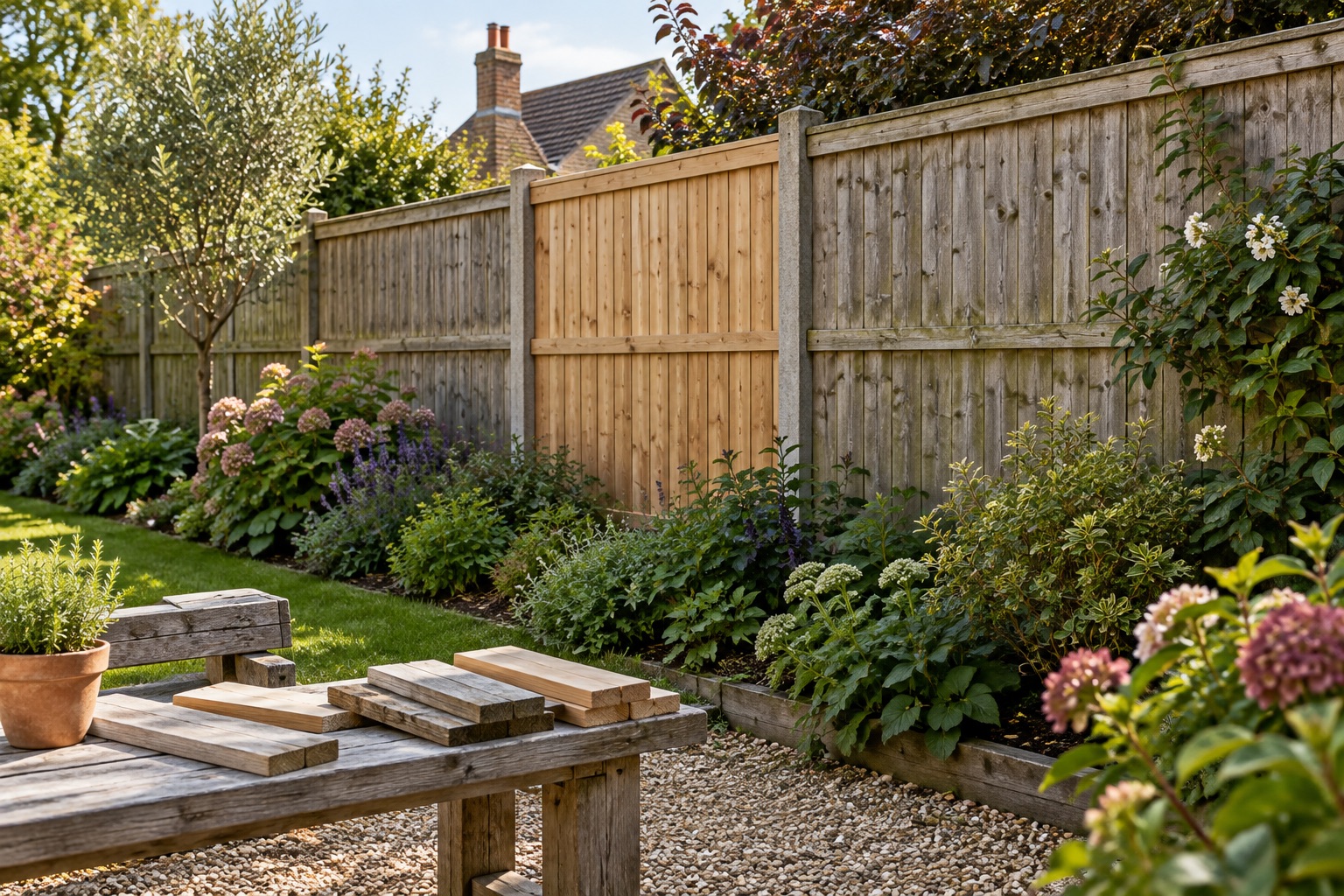
Check sourcing claims, expected care and the actual disposal route. No material is automatically the most sustainable choice for every boundary, and a broad green label is not a substitute for evidence.
Do you need to replace the whole fence?
A local repair or defined section replacement may preserve useful components and avoid unnecessary material use. It is only sensible where the retained parts remain suitable for the new assembly.
Use repair versus replacement and retention questions to assess that choice. Keeping a failing support can lead to repeated work; replacing sound parts solely for uniform colour is a different preference.
Specify for the intended use
A component that performs its role and can be maintained is a better starting point than one chosen only for a sustainability slogan. Consider exposure, ground contact, connections and compatible replacement parts.
WPA's timber-use guidance explains why the treatment specification should match the application. Appropriate treatment and responsible sourcing answer different questions.
Do not turn a desired service life or product guarantee into a promise that every installed fence will last that period under all conditions.
Understand what a sourcing label means
Ask for the sourcing claim attached to the actual product or supplied materials. A supplier's general commitment does not necessarily describe every item in its catalogue.
The Forest Stewardship Council's label explanation distinguishes FSC 100%, FSC Mix and FSC Recycled. They are not interchangeable claims, and FSC Mix should not be described automatically as fully recycled.
Keep relevant invoice and product records. Certification is not a complete assessment of foundations, transport, service life, maintenance or end-of-life handling.
Compare complete systems fairly
Timber, concrete, steel and composite systems differ in composition, manufacturing, maintenance and repair options. A valid comparison needs the same purpose, scope and assumptions.
Ask what supports, bases, fixings and replacement parts are included. A lightweight panel compared alone with an entire alternative system gives a misleading picture.
If a supplier makes a carbon claim, request its evidence, boundaries and assumptions. Do not invent a carbon saving from a material name or a transport distance. Product-specific declarations may inform a comparison but still need appropriate interpretation.
Design for later repair
Ask whether panels, boards and hardware can be replaced locally and how retained supports would be assessed. Keep product references and allow access to connections.
A neat design that can only be dismantled by destroying adjacent components may have different future implications from a compatible replaceable assembly. Discuss that before choosing a purely decorative detail.
Use handover records and the maintenance checklist to preserve useful information.
Plan end-of-life handling
Separate timber, concrete, metal and other materials in the disposal brief where the intended route requires it. Treated timber is not automatically suitable as firewood, mulch or unrestricted reclaimed material.
GOV.UK's waste guidance distinguishes contractor-generated waste from household disposal. Our Bedford removal guide links current local checks.
Ask what happens to the actual waste rather than accepting “recycled” without a destination or explanation. A stated collection arrangement is not evidence that every component will become another fence.
Include habitat without overstating it
Retained planting, suitable climber supports and planned wildlife connections can contribute to a thoughtful boundary. They need to work with access, maintenance and household requirements.
Read wildlife openings and fence versus hedge. A single opening does not justify describing the whole project as ecologically beneficial without considering clearance and the wider setting.
Ask for an explanation you can compare
A useful alternative quotation could retain suitable posts and replace damaged panels, while another replaces the complete run. Ask each business to explain what has been assessed, what remains uncertain and how the selected parts fit together. A smaller scope is only useful if it still delivers a serviceable fence.
Compare evidence at component level. A sourcing statement about timber does not describe the concrete bases, metal fittings or transport arrangements. Equally, the presence of one non-timber component does not establish that an entire system is environmentally worse. This guide does not rank complete products through a lifecycle assessment.
Keep claims specific: identifiable sourcing evidence, intended-use treatment information, replaceable components and an agreed waste destination. Be cautious about broad labels that do not explain their basis. Ask whether supporting information applies to the exact product supplied rather than another range in the same catalogue.
Make the maintenance plan realistic
A fence that can be inspected and repaired still needs someone to do it. Check whether planting, stored materials or attachments will prevent access to useful connections. Leave product details and photographs with the household's maintenance notes.
Choose a decorative finish because it suits the material and the appearance you want, with its upkeep understood. Do not assume that every advertised coating extends service life by the same amount. Ask for the actual instructions, compatible previous finishes and limitations.
At handover, identify useful spare components, replacement sources and the intended first checks. Those practical details make later maintenance less dependent on remembering which unlabelled timber or fitting was used.
Questions for a Bedford-area quotation
- Which useful components can reasonably remain?
- What sourcing evidence applies to the supplied materials?
- Is each component suitable for its intended use?
- How can the assembly be inspected and repaired?
- What maintenance and product limitations apply?
- Where will removed materials go?
Those questions create a reviewable proposal. They are more useful than choosing a product simply because it is described as natural, recycled or maintenance-free.
For a material decision, use the timber and composite comparison alongside the actual sourcing and disposal evidence.