Can fencing reduce road and neighbour noise?
Distinguish visual screening from acoustic performance and assess sound paths, system specifications and site-specific claims before buying a noise barrier.
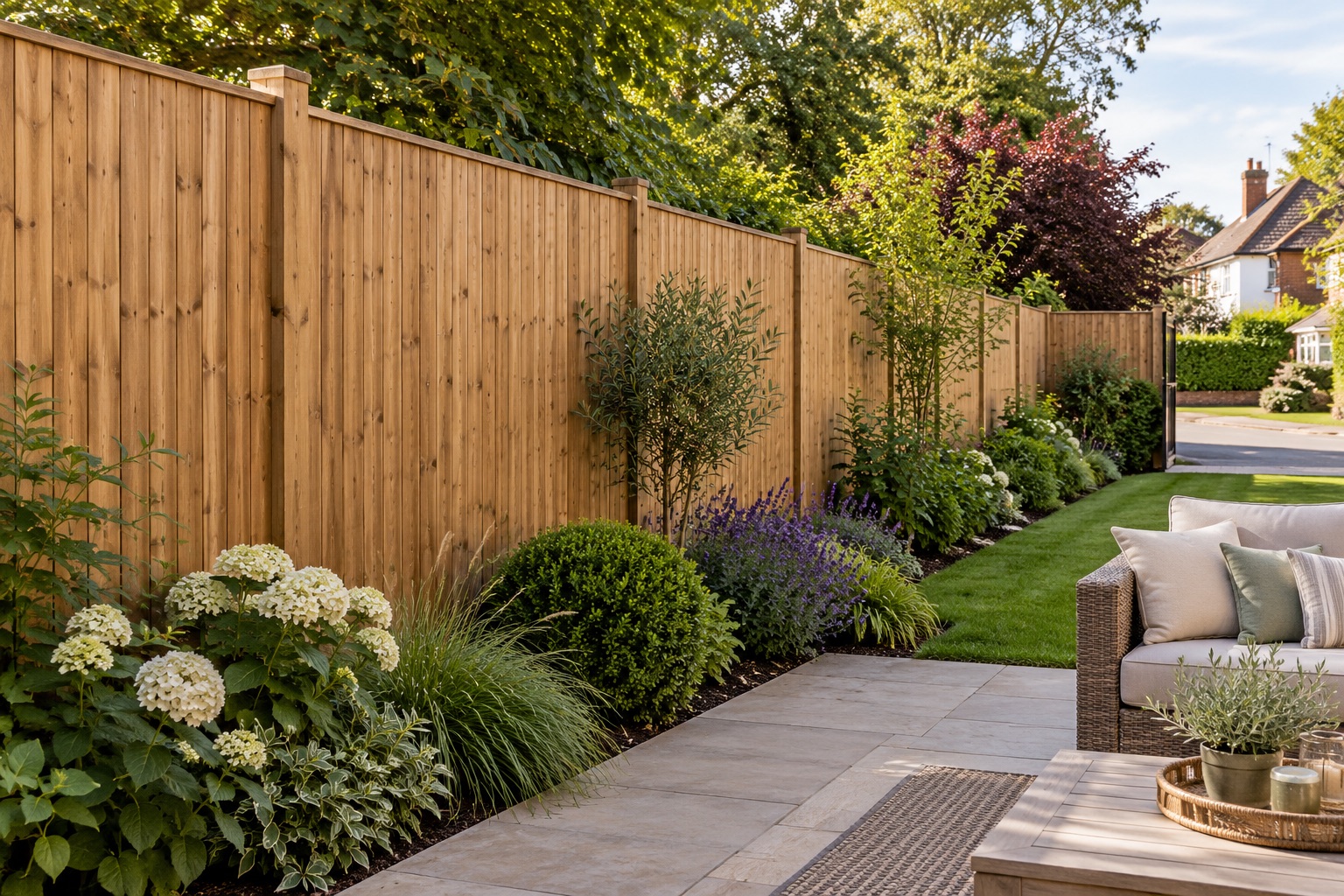
Noise reduction depends on the source, receiving position, barrier height and length, continuity and the actual system. Obtain site-specific acoustic advice before paying for a claimed sound-reduction result.
Describe the noise and the place you want quieter
Traffic at the patio, voices from next door and equipment near a bedroom are different problems. Record when the noise occurs and where it is most intrusive. A solution intended for a ground-level seating area may offer little benefit at a higher window.
Distinguish hiding the source from reducing the sound. A fence can make a garden feel more private while leaving much of the noise audible. That visual improvement may still be useful, but it should not be sold as measured acoustic performance.
Sound can travel over and around a barrier
A barrier changes sound paths; it does not create a silent enclosure. Height, endpoints, gaps and the positions of source and listener affect the result.
The US Federal Highway Administration's noise-barrier explanation illustrates the importance of sightlines and barrier extent. It concerns highway engineering, so its examples and dimensions should not be copied as a domestic fence design or predicted garden result.
Ask how the proposed arrangement addresses the actual sound path, especially if the road is elevated or the area needing protection is above the top of the fence.
Ordinary closeboard versus a specified acoustic system
A closeboard boundary can be visually solid without having the construction or continuity of a purpose-designed acoustic system. Board joints, movement, posts, bases and gates all matter.
For a manufacturer example, Jacksons' acoustic range uses a specified interlocking construction. Its test or product performance should not be attributed to a different ordinary timber panel.
Ask for the exact system, relevant evidence and installation requirements. The word “acoustic” in a quotation is not a complete specification.
What does a decibel claim actually describe?
A laboratory rating for sound passing through a product is not necessarily the reduction you will experience at a patio after installation. The whole site allows other sound paths.
Ask whether the figure describes a material test, an installed barrier assessment or a prediction at your receiving position. Request the assumptions, conditions and limitations. Avoid translating a brochure maximum into a guaranteed result at every point in the garden.
A suitable acoustic professional can help define a realistic objective and assess whether a barrier is worthwhile. That can be more useful than buying the tallest available fence first.
Gates, bases and future changes
A gate opening, an incomplete end or gaps that develop later can affect continuity. Discuss the complete assembly and maintenance rather than just the middle panel.
Jacksons' installation guidance explains why its acoustic performance depends on the correct solution and installation. Follow the selected system's requirements without improvising sealed details that create other problems.
Drainage, wildlife access and gates may need coordinated design. Do not simply block every opening without considering those functions and the relevant permissions.
Will a hedge solve it?
Planting can improve appearance and the sense of separation, but a narrow garden hedge should not be assumed to provide a major acoustic reduction. The RHS windbreak guide notes the limited noise effect of windbreaks and shelterbelts.
Use planting as part of a realistic design, not as a promise to silence a nearby road. A calmer-looking garden and a measurably quieter garden are related aspirations with different evidence needs.
Height, structure and Bedford checks
A tall continuous barrier needs suitable supports and foundations. Acoustic aims do not override height limits, listed-building constraints, ownership or access rights.
Use our Bedford planning guide and foundation questions. Explain the exact proposal and any specialist recommendations when seeking advice.
Make a performance claim answer a specific question
Suppose one brochure quotes a sound-reduction number for a tested panel, while another proposal estimates the change at your seating position. Those figures may describe different measurements. Comparing the larger number alone can send the decision in the wrong direction.
Ask each provider to identify the source, receiving position, complete barrier layout and evidence behind its statement. Record whether the outcome is a product rating, a site prediction or a contractual promise. Also ask which practical changes would invalidate the assumptions, such as a new gate opening or a shorter return at one end.
If the aim is to make conversation at a particular patio easier, name that location and use. If the concern is disturbance inside the house, explain that too; a garden barrier proposal may not address the same receiving position. Do not buy a visual screen while assuming an unassessed indoor benefit.
A useful next step may be a specialist feasibility assessment before a final fence quotation. Keep that scope and fee separate from the installation price so you know what conclusion you are paying to obtain.
Before accepting an acoustic proposal
- Identify the source and the position needing protection.
- Agree a realistic objective and who assesses it.
- Specify the complete system, dimensions, gates and endpoints.
- Check what any performance number actually measures.
- Confirm permissions, structural design and maintenance.
- Record exclusions and the basis of any promised outcome.
Our general estimator does not price a designed acoustic barrier. Obtain a separate site-specific scope and budget before treating it as a standard panel upgrade.