DIY or professional fence installation: compare the full cost
Compare complete DIY and installed fencing budgets, including tools, time, access, disposal, site difficulties and responsibility for the finished job.
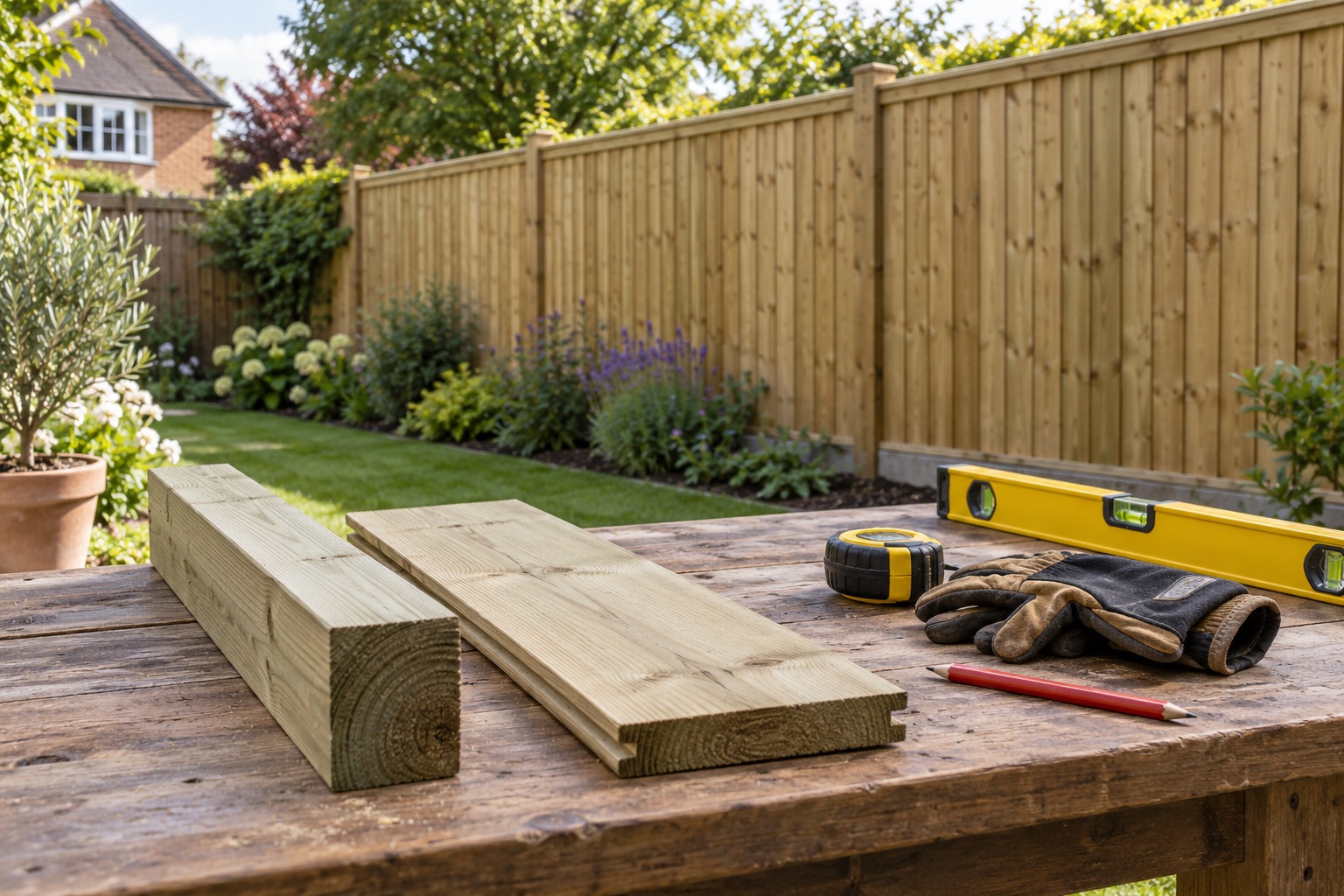
Materials alone do not show the saving. Include delivery, tools, help, removal, disposal, your time and the possibility of correcting mistakes. Retained-post panel replacement and building an entirely new boundary are very different DIY decisions.
What job are you comparing?
Swapping a compatible panel between sound existing supports is a different undertaking from removing a run of posts, excavating foundations and setting out a new fence. Before deciding who should do it, define the work. Otherwise a retail basket of panels gets compared with a quotation that also includes dismantling, heavy handling, digging, connections and disposal.
DIY may suit someone with relevant skills, suitable equipment, enough help and a straightforward job. Professional installation may offer better value when the layout, supports or access are difficult, or when you cannot leave the boundary open while learning. Neither choice removes the need to check ownership, permissions and the site.
This guide helps compare costs and responsibilities. It is not an installation method or a substitute for product instructions and competent assessment.
Build a realistic DIY budget
Make the materials list for the complete compatible system: panels or boards, posts, rails where needed, base boards, fixings, caps and the specified foundation materials. Add delivery charges and check whether the vehicle can unload where you need it. A price per panel can look attractive while leaving several necessary components uncounted.
| Cost heading | DIY questions |
|---|---|
| Materials | Is the list complete, compatible and available in the required sizes? |
| Equipment | What must be hired or bought, and for how long? |
| Handling | Who will help move bulky panels and heavy components safely? |
| Old fence | How will timber, concrete and fixings be handled and removed? |
| Time | What happens if the job takes another weekend? |
| Corrections | Can you afford replacement parts or skilled help if the plan fails? |
Write actual supplier and hire quotations into this sheet. Do not fill it with a headline percentage saving from an unrelated garden. A small repair with borrowed suitable tools and a new boundary requiring substantial equipment will produce very different comparisons.
Give your time a place in the decision
You do not have to price every hour of your weekend as if it were paid work. You should still ask whether the time is available. Planning, ordering, waiting for deliveries, clearing access and disposing of waste sit around the visible installation. Returning incorrect materials can consume time without moving the fence forward.
Think about the period while the boundary is incomplete. Children, pets and neighbouring gardens may need different arrangements. If you have only one free weekend and cannot tolerate an unfinished run, that constraint matters as much as the materials budget. A contractor's proposed duration should also be confirmed rather than assumed.
Recognise when the job becomes more demanding
Slopes, changing ground levels, narrow passages, awkward end connections and gates can complicate both setting out and handling. Existing foundations may occupy the proposed post positions. Roots, walls, drains or unknown services can prevent the simple layout suggested by a rough sketch.
For excavation, HSE identifies preparation, locating services and suitable digging practices as central precautions in its underground-services guidance. An old post position does not prove that a new hole nearby is clear. Do not improvise around an unidentified cable or pipe, or treat a basic detector as a guarantee.
Bulky panels can also be awkward even when you can lift their weight. Consider access, working space and controlled handling. If suitable help or equipment is missing, the saving on installation may be a poor reason to proceed. Ask for a survey where you cannot confidently assess the work.
What are you buying with installation?
A good installed proposal should define the specification, preparation, fitting, removal, exclusions and responsibility for problems. It may include delivery and waste handling, but read the quotation: these are not automatic inclusions simply because a professional has priced the job.
Ask who supplies the components, what happens if hidden conditions change the scope and what written workmanship terms apply. Product guarantees and workmanship promises are different. Neither should be guessed from a verbal reference to a long-life fence. Our paperwork and guarantees guide explains what to request.
Citizens Advice's England guidance recommends checking the trader, insurance, quotations and written contract before home-improvement work. Use those checks to assess the proposal rather than assuming any paid installation will be well managed.
Could you split the work?
Sometimes an owner clears movable garden furniture or cuts back planting they are entitled to manage, while the installer handles the fence itself. More substantial owner preparation needs explicit agreement. Do not dismantle a boundary first and expect the installer to accept whatever remains.
Agree the exact handover condition: what will be removed, what will remain, whether supports must be exposed and how waste will be handled. Ask what happens if preparation is incomplete on arrival. Compare the resulting quotation with the fully managed job; the saving may be less than the work you take on.
Buying your own panels for someone else to fit also needs agreement before purchase. Confirm sizing, compatibility, quantities, delivery timing, responsibility for shortages and who deals with faulty goods. The installer should have the chance to explain why the proposed materials do or do not suit the site.
Bedford access and disposal checks
For a Bedford-area garden, include the actual route from unloading point to fence. A side gate measurement, steps and a photograph of the passage help both your own plan and an installer quotation. Do not assume materials can be carried through a neighbour's garden without agreement.
Check current recycling-centre rules before planning a household disposal trip. Waste from work carried out by a tradesperson has a different route from qualifying household DIY waste. Our local removal guide links the relevant council and government information. The purchase cost of the panels does not cover these practical arrangements.
Make the comparison on equal terms
Put your complete DIY total beside a written installed total for the same scope. Add a separate note for your time, uncertainty and any work excluded from either option. Use our quotation comparison guide to keep the specification consistent.
If DIY wins comfortably and the work is within your capability, the numbers support that choice. If the difference narrows once tools, disposal and help are included, professional installation may be easier to justify. Where the decision depends on reusing existing supports, obtain a condition assessment before spending money on materials. The useful saving is the one left after the fence is complete and suitable for its purpose.